
Senior PCB Industry analyst in Taiwan. Our team offers unmatched expertise in executing deep-dive, fundamental analysis of the global PCB supply chain.
Taiwan
Joined October 2024
- Tweets236
- Following120
- Followers10.3K
- Likes46
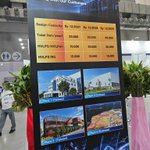


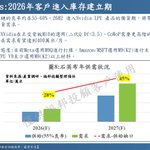


There are tons of ghost stories floating around explaining this ABF substrate washout, but if you check the actual factory, production is humming along completely normally. The components and upstream materials that were in shortage are still in shortage, and substrates are still moving down the line. This drop isn't driven by a sudden fundamental collapse—it's purely broken market sentiment and de-risking.
kokycpcb retweeted

美联储主席已经在为AI热潮失败、美股大跌做准备了。
就在刚刚,美联储主席凯文·沃什去了旧金山联储。
这是他出任美联储主席后第一次走访地方联储,专门为了给一场生产率与就业会议揭幕。
台下坐着他五个半月前攒局的特别工作组负责人,带头的是硅谷风投标志人物马克·安德森、斯坦福经济学家查德·琼斯和阿莎·夏尔马。
整场18分钟的演讲听下来,最受市场关注的,是他公开亮出了美联储理事会幕僚正在推演的一套下行剧本:
如果这轮AI投资让人失望,在巨额资本投入和股市大涨之后,预期回报掉头向下,就会导致美股估值下跌、美国经济放缓,同时带来更明显的失业率上升。
看到这,很容易觉得美联储在给AI泼冷水。
但把沃什的演讲全文顺下来,你会发现他算的是一笔更大的账。
他先摆出了一个困扰美国经济学界几十年的怪圈。
从上世纪30年代到现在,美国投入研发的精力增加了20倍以上。
但查德·琼斯和尼克·布鲁姆等学者算出来的结果是,研发产出效率反而跌得更凶。
花了20多倍的力气,突破性的好点子却越来越难找,再加上人口增速放缓,经济学家才总在聊“长期停滞”。
那这一轮技术浪潮能不能破局?
沃什在演讲里反复用了一个词,叫“超级智能”(SI)。
它跟过去的内燃机、电力、晶体管有什么不一样?
以前的通用技术确实能带动几十年的后续创新,但它们自己不会自动生产新点子。
而超级智能改变的是想出新点子的方法和速度,相当于把创新本身给加速了。
沃什甚至引用了诺奖得主蒙代尔关于美国崛起的论断,在台上直接问了一句:
没有超级智能,还能当超级大国吗?
既然把战略高度抬到了这一步,为什么美联储幕僚还要在模型里推演“AI失败”?
因为央行不能赌单边行情,货币政策必须做底线预案。
沃什在现场把美联储内部正在评估的三套推演剧本全部摊开了:
第一套是顺风剧本。
超级智能带动生产率起飞,经济收益在劳动者和资本所有者之间广泛分享,实际GDP长期跑在历史均值之上,美国保持充分就业。
第二套是抢饭碗剧本。
技术确实把GDP增速推到了长期均值以上,但大量岗位是被机器直接替代,而没有和人工形成互补。
大规模自动化加上劳动力市场的转换摩擦,结果就是经济在高增长,失业率却被推高到充分就业水平之上。
第三套就是今天刷屏的失望剧本。
前期天量的资本开支砸下去、股市涨上去之后,发现回报不及预期。
股票估值下杀,拖累经济放缓,失业率显著攀升。
虽然过段时间经济能缓过来,但指望靠它实现的生产率跃升落空了。
把这三套剧本摆在一起看,你就明白美联储现在的难处了。
高增长低失业、高增长高失业、经济放缓加股市下跌,这三种局面要是真砸下来,利率该往哪边拧,方向完全不同。
沃什在台上反复说明,这些只是模型推演场景,不代表美联储的预测。
但当全美国的资本开支、股市估值甚至大国竞争的筹码都押在同一条技术曲线上时,管货币总阀门的人,必须先把每一种结局的账算清楚。


kokycpcb retweeted

번스타인(Bernstein) 리포트 떴는데, 미국 데이터센터 '구라'랑 '진짜' 싹 다 발라버림 ㄷㄷ
요즘 AI 데이터센터 짓는다고 너도나도 입만 열면 몇 기가와트(GW)씩 짓는다고 설레발치는데(일명 Bragawatts),
번스타인이 Aterio 데이터 뜯어서 실제로 완공 가능성 있는 '진짜(Credible)' 물량만 추려냄.
• 전체 발표된 파이프라인은 586GW인데, 실제로 지어질 신뢰도 높은 물량은 199GW(약 34%)뿐임.
나머지는 전력망 연결 안 되거나 허가 막힌 뻥카 물량이라는 소리 ㅋㅋ
• 주요 기업별 실제 건설 가능(Credible) 파이프라인 순위
- 아마존 $AMZN : 33GW (발표 46GW 중 72% 인정, 압도적 1위)
- 구글 $GOOGL : 20GW (인정 비율 83%)
- 메타 $META : 15GW (인정 비율 86%로 이행률 최상위권)
- 마이크로소프트 $MSFT : 10GW (인정 비율 85%)
- QTS : 9GW (블랙스톤 $BX 산하 데이터센터 전문 기업)
- Stack Infra : 7GW
- Vantage : 6GW
- 디지털 리얼티 $DLR : 4GW
• 결국 자본력이랑 전력망 확보 능력 되는 빅테크 하이퍼스케일러들이 전체 진짜 물량의 42%를 싹쓸이하는 구조임.
어중이떠중이 신생 네오클라우드나 코인 채굴장 개조 애들은 합쳐봐야 비중 한 자릿수대라 입만 산 경우가 태반임.
• 참고로 이 데이터 보더니 일론 머스크가 스페이스X $SPCX 는 내년에 실제 가동 가능한 컴퓨팅 파워로 저기 절반 수준까지 따라잡을 수 있고,
클러스터 구축 속도도 남들 6개월 걸릴 때 2개월이면 끝낸다고 등판해서 또 어그로 끔 🤯
케펙스(CAPEX) 쏟아붓는다고 다 데이터센터 되는 게 아니라
전력망이랑 변압기 쥐고 있는 찐 빅테크들만 살아남는 판임.
"Not financial advice"


Industry reality check on NVIDIA Rubin’s high-speed laminate allocation:
Rumors around resin formulation tweaks and recipe adjustments miss the macro hardware picture:
1️⃣ EMC share expansion is inevitable: Superior lot-to-lot consistency and proven shop-floor yield stability are an open secret. As Rubin pushes signal margins to theoretical limits, the halo platform defaults to the lowest-risk substrate. EMC captures the initial volume spike.
2️⃣ Shengyi Technology will return: Formulation hiccups are par for the course on frontier nodes. Once adjustments clear shop-floor tuning, Shengyi’s scale cost economics bring them back into rotation.
3️⃣ The upstream constraint rule: Upstream bottlenecks—from specialized glass weaves to ultra-low profile foils—remain far tighter than downstream processing. In an era of structural material deficits, hyperscalers cannot afford to sideline an established volume pillar.
Allocation shifts are cyclical; ecosystem dual-sourcing is permanent. ⚡️📊
#NVIDIA #Rubin #PCB #CCL #EMC #Shengyi #SupplyChain #Hardware #Semiconductors

CCL rumors going around regarding Shengyi technology 生益科技 600183.SS
@pcbanalysis are you hearing anything about this ?
1. Rosalind CCL supply chain reportedly switching suppliers:
1) According to sources in Taiwan’s supply chain, a major incumbent CCL (copper-clad laminate) supplier has exited NVIDIA’s ( $NVDA) Vera Rubin NVLink Switch (Rosalind) CCL supply chain. The original report did not name the supplier.
2) This supplier had originally planned to capture 50% of the market for this product line in 2026, but its S9GN2 (M8+LowDK2) dielectric material developed serious quality issues.
3) As a result, PCB mass-production yields fell below 10%, far below the 70–80% achieved with Taiwanese supplier’s EM-892K2 material. NVIDIA has turned to the Taiwanese supplier to secure capacity. EM-892K2 is a material grade from Elite Material ( 2383.TW).
2. Board specifications upgraded, amplifying material defects:
1) The Rosalind PCB stackup has been upgraded from Blackwell Juliet’s 22-layer PTH design to a 32-layer (16+16) N+N structure, tripling the number of sequential lamination cycles.
2) Defective material has caused widespread yield failures at major PCB manufacturers, including Victory Giant Technology ( 300476.SZ) and Kingboard (0148.HK), during mass production.
3. Subsequent impact on market share and shipments:
1) Citing SemiAnalysis’s forecast, the Taiwanese supplier will become the exclusive CCL supplier for Rosalind, with a 100% market share.
2) The former supplier’s ongoing quality issues could delay shipments of Rosalind switches and NVL72 racks in the fourth quarter of 2026.
3) The original report argues that, by continuing to expand production capacity, delivering excellent dimensional stability through low CTE, and maintaining consistent batch quality, the Taiwanese supplier is expected to consolidate its position as a leading supplier of high-end CCL for NVIDIA’s next-generation AI hardware.
H/T: @QQ_Timmy
substack.com/@wkwkwk5346/not…


kokycpcb retweeted

Some Copper Foil (CF) chatter today:
Furukawa Electric announced today that it will approximately double its copper foil production capacity for AI servers. The expansion will take place at its facilities in Nikko City, Tochigi Prefecture, and Taiwan, with completion targeted for the end of fiscal year 2029. The target is a copper foil called "F0X-WS foil," which has an extremely smooth surface. It is used to achieve high-speed, high-capacity signal transmission. The investment amount and the production capacity after the expansion have not been disclosed.
Mitsui Mining & Smelting is also increasing production of "VSP," a copper foil with similar characteristics. The company plans to increase its monthly production capacity to 1,400 tons in fiscal year 2030, a 67% increase compared to fiscal year 2026. Amidst strong AI demand, companies are successively increasing production.
nikkei.com/article/DGXZQOUC0…
🔽 🔽 🔽
We see continued material-cost pressure for AI server boards, with Goldman Sachs expecting copper foil supplier Co-Tech to raise prices about 10% across its foil products in Q4 versus Q3.
Co-Tech (8358 TT) makes copper foil for circuit boards. Its high-end, low-roughness foil helps reduce signal loss in the high-speed connections used by AI servers and network switches.
Goldman reports that Co-Tech targets effective monthly capacity for HVLP3-and-above foil of approximately 833 metric tons by the end of 2027, 1,666 by the end of 2028 and 2,500 by the end of 2029. That compares with roughly 200–250 metric tons a month currently.
Multiple customers have already secured capacity in the planned expansion, according to Goldman. The bank still expects the additions to fall short of demand from key customers.
For board makers, a larger capacity plan therefore offers limited evidence of near-term cost relief. That will depend on how quickly usable supply grows relative to orders.
Mitsui Kinzoku 三井金 $5706.JP
Co-Tech 金居 8358.TW
Tongguan Copper Foil 铜冠铜箔 301217.SZ
JX Metals (JX金属) 5016.JP
Furukawa Electric 古河電工 5801.JP
Lotte Energy Materials 롯데에너지 $020150.KW
H/T @illyquid & @statementdog


The HVLP copper foil bottleneck.
I've been writing about this, HVLP has one of the longer running bottleneck timelines along with ABF substrate.
Mitsui Kinzoku 三井金 5706.JP is the primary beneficiary but recently Co-tech 金居 8358.TW earned a spot on the watchlist as a secondary beneficiary.
Our research has also turned up a third possible beneficiary, although deeper research is required on this one; Lotte Energy materials 롯데에너지머티 020150.KW which has been experiencing very bullish PA over the past several trading sessions.


When data centers start spreading across overseas regions (Middle East, APAC, Europe), the PCB dynamic shifts noticeably. TTM’s core selling point has always been its US proximity, quick NPI turns, and domestic compliance. As hardware builds move offshore where those constraints loosen, mainland Chinese fabricators—Shennan, Kinwong, Founder, and Shengyi Electronics—naturally pick up market share on capacity scale and aggressive pricing. Meanwhile, top-tier Taiwanese board houses like GCE don’t break a sweat; their China-based plants have been mass-producing high-layer server boards for years, so their cost base and delivery remain unmatched. More importantly, look at the material tier: The business stays firmly anchored with EMC, Nan Ya Plastics, and Shengyi Technology."
kokycpcb retweeted

【BRUTAL】Elon Musk: "La gente que solo le hace preguntas a la IA se va a quedar completamente atrás", su declaración es una locura jajaja
Empleado: "¿Cuál es la forma correcta de usar la IA?"
Elon: "La mayoría de la gente la usa mal."
Empleado: "¿Eh?"
Elon: "Haces una pregunta, lees la respuesta y se acabó, ¿no?"
Empleado: "¿No es así como se hace normalmente?"
Elon: "Eso es desperdiciarla."
Empleado: "¿Entonces qué hay que hacer?"
Elon: "Darle 50 subordinados a la IA."
Empleado: "¿Qué? jajaja"
Elon: "Primero, una IA Chief of Staff planifica el día."
Empleado: "Vale."
Elon: "Después, una IA jefa de proyecto reparte el trabajo."
Empleado: "Ya veo."
Elon: "Y más de 50 agentes de IA hacen el trabajo."
Empleado: "¡¿50?! jajaja"
Elon: "Y encima pueden trabajar las 24 horas."
Empleado: "¿Pero eso no es como una empresa humana?"
Elon: "Exacto. La IA gestiona a la IA."
Empleado: "¿Y entonces qué hacen los humanos?"
Elon: "Fijan los objetivos y toman las decisiones importantes."
Empleado: "……"
Hasta ahora, la IA era un humano que hace una pregunta y recibe una respuesta.
Pero con los agentes de IA puedes dividir el trabajo, repartirlo entre varias IA e incluso montar un sistema para revisar los resultados.
Por supuesto, sigue haciendo falta supervisión humana y control de calidad.
Aun así, pasamos de la época en la que la IA era un simple asistente a la época en la que diriges un equipo entero de IA.
A partir de ahora, ganarán más los que sepan delegarle el trabajo a la IA que los que sepan usarla.
kokycpcb retweeted
帮民主党翻盘的,全是急着跟极左割席的温和派。
网上的大喇叭都在高呼身份议题和激进法案。
但只要仔细拆开看,事情完全是另一副样子。
真正从共和党手里把席位抢过来的那些胜选者,没有一个人在选区里喊口号。
他们的竞选广告几乎是一个模子刻出来的:
聊房贷利率。
聊超市里的鸡蛋和牛奶。
聊工薪家庭的医保账单。
至于激进派最喜欢的那些议题,他们恨不得连夜撇清所有关联。
谁要是敢在郊区选民面前提一句削减警察经费,或者激进的性别实验,选票当天就会蒸发干净。
这背后无关崇高理念,完全是一道算术题。
在加州或纽约的深蓝选区,激进派候选人怎么喊都能赢。
得票率哪怕从百分之七十五掉到百分之六十五,席位依然丢不掉。
但要在国会凑齐多数,靠这些铁票仓根本不够。
真正决定胜负的,永远是那十几个胜负差距不到两个百分点的摇摆选区。
那里的选民全都是普通的上班族、小企业主和退休老人。
他们不上推特吵架,他们每个月要实打实付账单。
对他们来说,候选人是不是意识形态信徒根本不重要,生活成本飙升才是真刀真枪的痛感。
所以那些真正能赢的候选人,打法就一条:
把激进言论全部关在门外,只做最接地气的经济承诺。
网上的激进派负责制造声量,但最终替党派赢下权力的,全是那些在现实常识面前老老实实低头的温和派。
If you look at where Panasonic's order spillover is actually landing, the demarcation line is very clear.
M8+:EMC
M6/M7 :Nanya plastics

In the early hours of today (November 4), a major fire broke out at Taiwan #Panasonic’s multilayer materials plant on Guangfu Road in the Hsinchu Industrial Park. The incident was accompanied by loud explosions and massive plumes of thick black smoke.
The facility manufactures advanced printed circuit board (PCB) materials. Its manufacturing processes and on-site storage may involve significant quantities of epoxy resins, chemical adhesives, and highly volatile, flammable organic solvents such as acetone and toluene.
Chemicals and plastic materials are reportedly burning, generating dense smoke that may contain toxic and irritating gases, potentially including dioxins and nitrogen oxides (NOx). The exact chemical composition and toxicity of the emissions have yet to be confirmed.

kokycpcb retweeted

Expert Takeaways: AI Chip Market
AMD's Role in Google TPUs
> AMD is currently in an early discussion/evaluation phase for Google's TPU v10 program, focusing on CPU IP, integration, and packaging expertise.
> AMD's involvement does not mean they are replacing Broadcom; Broadcom's contribution and share in the Google TPU remain secure, and AMD's spot in a potential v11 program depends on their performance in v10.
> Integrating core logic, SRAM, HBM dies, and interfaces requires massive expertise, and AMD brings valuable experience in integrating CPUs and chiplets.
Google TPU Revenue and Projections
> Google began recognizing external TPU sales in Q2 of the year.
> External TPU hardware revenue was $8 billion for the current year, projected to be $51 billion in 2027, and around $104 billion in 2028.
> Google's cloud backlog stands at $514 billion, with TPU system sales scaling from single-digit billions in 2026 to tens of billions of dollars.
Impact on NVIDIA and Hyperscalers
> While overall AI demand is growing rapidly enough for NVIDIA to continue increasing revenue, custom deployments and successful custom accelerators (like Google's TPUs) pose a risk to NVIDIA's long-term market share and pricing power by setting a precedent for other hyperscalers like Microsoft and AWS.
> Alphabet's internal hardware metrics show an estimated $22 billion in annual NVIDIA purchases, representing roughly 15% of its server and compute spending.
> NVIDIA's estimated data center revenue share is heavily distributed among major players: Microsoft (18%), Meta (13%), Amazon AWS (9%), Google (9%), and Oracle (4.5% to 5%).
> Microsoft is the largest hyperscaler buyer due to high Azure AI demand, while Meta relies heavily on GPUs despite its MTIA chips, and Amazon pursues both strategies with NVIDIA GPUs alongside Trainium and Inferential.
CapEx Spend
> The expert projects Alphabet’s total CapEx at around $200 billion—with server infrastructure representing ~$120 billion—while noting that overall AI market CapEx continues to expand rapidly across major hyperscalers despite questions about how long 100% annual CapEx growth can persist.
$NVDA $AMD $GOOGL $AMZN $META $MSFT
Via @RihardJarc - thanks for the great work, follow him


Intel check on Amazon AWS Trainium4 (TR4):
PCB trial production (pilot runs) is slated to kick off in 1H27—moving ahead of silicon readiness to de-risk board-level design.
Fabricator Qualification (4 primary players):
• Gold Circuit Electronics
• Shengyi Electronics
• Zhen Ding Technology
• Meiko Electronics
CCL / Material Layer:
Factoring in lead times, process stability, and end-customer posture post-TPCA checks, only two Taiwanese suppliers have submitted samples for this qualification cycle:
• Elite Material Co.
• Nan Ya Plastics
Monitoring execution and validation yields closely as board shops ramp up pilot builds. 🧵📊
#AWS #Trainium #PCB #CCL #EMC #NanYa #SupplyChain #Hardware #Semiconductors
那些自研晶片要放量...就被搶不到載板和上游料所卡住...一些新進的設計商和新一代晶片也不一定能拿到足夠板子和材料...
只能繼續看下去..

上次ABF载板交期已经是48-56W了,现在三大巨头又开始锁产能了!
供应关系说明一下:NVDA和AMD预订ABF载板最终是要送到台积电或封测厂完成封装,ABF载板通常可由封装供应商统筹采购,但芯片厂会对先进封装测试的主要供应商参与评估认证及测试等;当供应竞争时,芯片公司会更积极地直接签约、预付款,提前锁定上游产能。
据《经济日报》10月24日报道,Intel、AMD、NVIDIA 对载板产业的投入合计约50亿美元:
• Intel:约30亿美元
• AMD:约10亿美元
• NVIDIA:对台湾载板相关投入约10亿美元
三巨头高端载板供应商:
Intel:揖斐电(4062.T)、新光电气、欣兴(3037.TW)、AT&S(ATS.VI)。
AMD此次公告点名:欣兴(3037.TW)、景硕(3189.TW)、南电(8046.TW)。
NVIDIA此次扩产协议点名:揖斐电(4062.T)、三星电机(009150.KS)、欣兴(3037.TW)。
从供应链角度看,提前出钱、签长期协议锁产能,说明供应关系已经极度紧张,而且NVIDIA此次合作中,部分新增载板产能要到2027—2028年逐步交付。
Field intelligence post-TPCA Show 2026 indicates that the traditional 'Taiwan Big 3' analytical framework fails to capture structural shifts across the high-speed CCL ecosystem:
EMC: Dominance in tier-1 AI compute trays and hyperscaler custom ASICs remains unchallenged. Strategic positioning in orbital compute (reinforced by recent SemiAnalysis findings) establishes a durable geopolitical barrier against Chinese competitors, while extended 2–4 month lead times reflect structural tightness.
Shengyi Technology: Underrepresented in Taiwanese equity research, yet mainland PCB tier-1 fabricators confirm constructive progress on PTFE processing. Shengyi remains the sole competitor operating at equivalent scale to EMC, positioned to capture dominant market share allocation for the flagship US GPU program.
Nan Ya Plastics : Demonstrates the widest divergence between sell-side sentiment and commercial traction. Ascending qualification marks from key hyperscalers and PCB fabricators, coupled with aggressive high-speed development (M10.5–M11) and captive upstream raw material integration (high-end foil, E/LK/T glass fabrics, and strategic Nittobo collaboration), establish Nan Ya as the clear volume leader in M6–M7 applications entering 2027.
Doosan: Maintains primary designated supplier status for optical transceiver modules, with supply anticipated to remain on strict quota allocation through 2027. While introducing M10-grade laminates following developmental resistance at M9, downstream qualification trajectory requires monitoring.
ITEQ : Executes a disciplined tier-2 containment strategy. While trailing Nan Ya in captive material security, overarching market deficits ensure robust spillover allocation for high-speed materials alongside design-ins across LEO satellite networks and steady M6–M7 exposure.
TUC : Promotional focus pivoted prominently toward LEO satellite sectors. Cross-verifications across upstream weavers and downstream PCB fabricators highlight ongoing scrutiny regarding material consistency and customer qualification for M9+ architectures, leaving commercial adoption of showcased M10–M11 laminates dependent on tangible customer commitment.
Technical capability displays at trade exhibitions do not correlate directly with addressable volume orders. Sustainable commercial execution requires fabricator process compatibility and end-customer trust; deficits in either metric inevitably derail market consensus expectations."
#PCB #CCL #EMC #Shengyi #NanYa #ITEQ #TPCA #TUC #Semiconductor #Hardware #SupplyChain

