








Kunal Parikh retweeted

To Australian Palestine Protesters,
Let’s be really precise.
This country is not a collection of avatars for overseas conflicts. It is a civic space.
Citizenship comes before ideology.
Being Jewish in Australia does not assign responsibility for Gaza. Being Iranian does not assign responsibility for Tehran. Being English does not assign responsibility for empire. Being Italian does not assign responsibility for history. Being Indigenous carries no burden of apology and requires none from others.
Identity does not function as evidence.
Political disagreement is normal. Protest is lawful. Voting habits are private. None of these confer moral liability on neighbours.
Australia works on a simple rule. Individuals answer for their own conduct. Groups do not inherit guilt. People are neighbours first, symbols last.
Once that rule erodes, society shifts from coexistence to faction. At that point, argument gives way to intimidation. Speech becomes a weapon. Public space becomes hostile.
Targeting Australians for conflicts elsewhere achieves nothing beyond friction at home. It generates resentment without leverage and noise without outcome. It converts protest into social damage.
That path leads nowhere useful.
Justice requires clarity. Community requires restraint. Peace depends on both.
That line matters.
Keep going and you’ll burn down our entire society
Kunal Parikh retweeted

Feeling tired? Walk.
Feeling anxious? Walk.
Feeling stressed? Walk.
Feeling unmotivated? Walk.
Your life will change when you make walking your default.
Kunal Parikh retweeted

A house becomes a home when it has a drawer with a screw that looks too important to throw out but you have no idea where it came from.
Kunal Parikh retweeted

A common mistake that AI companies make nowadays is to not give their engineers enough time and mental calm to do their best work. Constant deadlines, pressure and distractions from daily AI news are poison for writing good code and systems that scale well. That’s why most AI APIs and products have reliability issues.
A good company culture that mixes excellence with focus and enough rest leads to faster and better results. The best example of how to do it well is the early Google culture from 1998 which resulted in one of the largest scale and most reliable services on the web in just a few short years. Founders should copy some of the strategies that Larry and Sergey used. They are still underrated IMO despite their huge reputation.
Kunal Parikh retweeted

The adult version of ‘Head, Shoulders, Knees, and Toes’ is ‘Wallet, Glasses, Keys, and Phone’.
Kunal Parikh retweeted

Two people who collaborate well will be about three times as effective as each of them operating independently, because each will see what the other might miss--plus they can leverage each other's strengths while holding each other accountable to higher standards. #principleoftheday

Kunal Parikh retweeted

A test…Give this 💣 thread a repost or quote. Most can’t see it. The owner of this app denies it, but my new BFF Grok concludes this thread, others critical of the car company CEO, his outlandish claims, and denial of suppressing speech on this platform are indeed shadow banned.

Kunal Parikh retweeted

From biscuits to BBQ: Ted Lasso Season 4 kicks off production in Kansas City! ⚽️

ALT Leslie Higgins, Rebecca Welton, Keeley Jones, and Ted Lasso sit side-by-side in a corner booth at a BBQ restaurant. Leslie, Rebecca, and Keeley are all looking at Ted, who is looking back at them. On the table are plates of food and glasses of water and soda.
Kunal Parikh retweeted

You don't feel great during your best writings.
You don't feel great when you are about to make the best investment of your life.
You don't feel great when you are about to make a lifelong commitment that will change your perspective.
You don't feel great when you are about to move abroad and rebuild your life from scratch.
You don't feel great during a tough workout that makes you stronger.
You don't feel great when you are reading a difficult book that makes you wiser.
You don't feel great when you are solving a painful problem that makes you smarter.
You don't feel great when you disagree with people who had previous successes, but who are probably wrong this time.
You don't feel great when you are breaking up with the average version of yourself.
It's actually recommended to not feel great; that's when the best things in life happen.
Kunal Parikh retweeted

I love coding. Yet I am perfectly happy that AI agents will write more and more of my code. What I love most about development isn't the writing code part, it's building things and achieving results.

Kunal Parikh retweeted
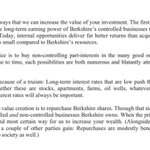
Happy sharing the Semper annual letter. I dread the start, but once immersed love the process and always learn something. Makes the labor of love worthwhile, as does your appreciation and kindness. The ongoing analysis of Berkshire is included. Thank you! semperaugustus.com/clientlet…
Kunal Parikh retweeted

3,333
Produced by @_al_hug
Featuring Rachel Robinson


10YO: Dad, share your playlist with me.
12YO: Do you mean that? Do you really want to listen to _his_ playlist?
10YO: Yeah, he’s like got three good tracks.
Me: 🙄

Kunal Parikh retweeted

I’m going to draw a parallel that isn’t quite straight, but it’s close enough.
It’s between old (analog) cars and new (digital) cars, simple (analog) businesses and complicated (digital) businesses.
Lately I’ve been driving two distinctly different cars. One from 1970, and the other from 2023. They essentially have nothing in common other than they’re cars.
Some who don’t care much for cars might say that’s everything in common. On paper I can see the argument, but get behind the wheel of both, and go for a drive, and you wouldn’t say the experiences were equivalent. They’re as different as different can be.
The 1970s experience is analog. Your leg strength determines your stopping power. The road surface below clearly communicates with your ass. The steering wheel actually feels like it’s turning the wheels. The windows roll down by turning a crank that literally rolls them down. Switches snick, dials click. This is a direct experience, with mechanical feedback, requiring full attention and real effort.
The 2023 experience is digital. Nearly everything is abstracted. The brakes are heavily mechanically assisted. Steering even more so. You can’t really feel the road surface because the suspension masterfully absorbs every little detail. Even the buttons have been replaced by touchscreens with haptics. This is an indirect experience, with simulated feedback, requiring some attention and little effort.
Which you prefer is up to you. I happen to love both for different reasons.
And that’s just driving. The gulf is wider when it comes to repair.
With an old analog car, a problem’s cause is more obvious. Linkages are visible, this connects to that, teeth mesh to move gears which move shafts which move wheels. When something’s broken it’s generally confirmable with a common tool and a set of eyeballs. Any mechanic with a basic understanding can diagnose any problem relatively easily — sometime solely by ear. There are only so many things it could be, and they’re all right in front of you.
With a modern new car, computers enter the picture. Engines are covered, sometimes even inaccessible. Cars crash, but so does firmware. This doesn’t turn that, this sends electrons to that, which are then interpreted by circuits and software and systems. Which one’s to blame when something doesn’t work? It’ll take a while to find out, and at least $1000. Almost anything can be wrong, and you’ll have to leave the car at the shop for a while so they can plug it in and run diagnostics. The human defers to the machine to tell us.
Pros and cons for sure.
Now for the parallels to business.
Through this car experience lens, I’ve come to see businesses as either analog or digital too. I’m not describing their product or what they make. I’m talking about how they’re structured, how they run. An analog business can make software, and a digital business can make pizza.
An analog business is direct. It’s clear what does what, and how it does it. When something changes, you typically know what changed. There’s some suspension to absorb the bumps, but it’s basic — you’re never too far removed from the root cause. There are fewer managers and more doers. There’s less distance between the customer and the maker. Feedback is heard, not interpreted and translated. No decks, just conversations and writing.
A digital business is indirect and abstracted. The structure is obscured, riddled with departments and groups run by other groups. Decisions are complicated because one too many people are involved. What should be simple has become complex — the result of process that serves the prospect, not the purpose. Everything is padded. Getting to someone requires going through something. Customers are a concept, sliced by demographics. Everything’s a presentation rather than a conversation.
As usual, the analogies and metaphors don’t map perfectly, but hopefully you feel what I’m getting at. Does it resonate?