

Official Twitter handle for the Grove City College Exercise Science Program
Grove City, PA
Joined February 2020
- Tweets132
- Following44
- Followers49
- Likes190


GCC Exercise Science retweeted

Our new paper questions whether fuel replacement alone explains reported benefits of CHO >90 g/h. Higher CHO oxidation does not consistently improve performance or spare muscle glycogen. We propose a novel, central-to-peripheral pathway doi.org/10.1016/j.mehy.2026.… @PaulBLaursen

GCC Exercise Science retweeted
Great work by our @GroveCtyCollege Exercise Science students at @MARCACSM! Presenting research investigating the effects of carbohydrate, exogenous ketones, and sodium supplementation on metabolism and exercise performance @ACSMNews @ketone @drinkLMNT @ProfTimNoakes @AKoutnik

GCC Exercise Science retweeted
Please consider giving to support research in Grove City College's Exercise Science Department. Our work investigates how diet and nutritional interventions affect metabolism, glucose regulation, and exercise performance engage.gcc.edu/g/2026wolveri… @GroveCtyCollege
GCC Exercise Science retweeted
New paper out. A high-sodium, carbohydrate-free electrolyte supplement (LMNT) produced significantly faster cumulative times at 5 and 10 km during a 15-km treadmill TT in warm/humid conditions. Final 15-km time was ~2% faster (NS) mdpi.com/2075-4663/14/10/435 @drinkLMNT @ProfTimNoakes

GCC Exercise Science retweeted
In our new Science & Sports paper, CGM helped trained non-diabetic athletes better understand how food and exercise shaped their glucose patterns, supporting dietary awareness, informed decision-making, and more personalized nutrition strategies @AKoutnik
sciencedirect.com/science/ar…

GCC Exercise Science retweeted
New case study out in IJES. This real world Ironman example extends our recent work suggesting that low-dose CHO intake may help to maintain euglycemia and preserve pacing during prolonged exercise by mitigating EIH intjexersci.com/ijes/vol19/i…
@ProfTimNoakes @AKoutnik

GCC Exercise Science retweeted

📢Congratulations Philip Prins! #AJPCell Best Impact Paper Award presented at #APS2026.
"Carbohydrate ingestion eliminates hypoglycemia & improves endurance exercise performance in triathletes adapted to very low- and high-carbohydrate isocaloric diets"
🔬ow.ly/ielw50YWvqw

GCC Exercise Science retweeted

🚨 Boston Marathon carb fueling debates are raging: extremely high-carb intake? … or can minimal carb intake work?
Incredibly honored that our RCT on athlete fueling won @APSPhysiology 2025 BEST IMPACT PAPER (@AJPCellPhys) 🏆
We tested key scientific questions in Ironman-level athletes:
1️⃣ Does LCHF impair strenuous time-to-exhaustion performance?
2️⃣ Does just 10g/hr carbs (3.4g/20min — 6-12x below guidelines) improve performance? How?
3️⃣ What’s the keto-adaptation homeostasis timeline?
📜 Full article: journals.physiology.org/doi/…
None of this happens without the incredible teamwork from @PhilipPrins11, @ProfTimNoakes, @DominicDAgosti2 & the whole crew who worked hard to push the evidence forward on how athletes should fuel.


🧵Very-low carb (ketogenic; LCHF) vs high-carb diet (HCLF):
-Ironman triathletes (n=10)🚴♂️
-"Hitting the Wall"🥵
-Homeostasis monitoring ("Keto-Adaptation")📈
Our hypothesis was wrong...again
🔍CRITICAL QUESTIONS:
1) Does adopting an LCHF diet impair strenuous time-to-exhaustion performance?
2) Does carb supplementation (3.4g/20min) during exercise, 6-12x lower than current CHO fuelling recommendations, improve time-to-exhaustion on LCHF? If so, how?
3) Keto-adaptation homeostasis timeline?
🔏KEY CONTROLS:
1) Randomized & Controlled
2) ❎Crossover Design
3) ↔️Calories
4) ↔️Physical Activity Load
5) Dietary Compliance:⬆️BHB + CGM
What did we see? 1/n
🔗Detailed study breakdown below

GCC Exercise Science retweeted
Thank you for this tremendous honor @APSPhysiology . I’m sincerely grateful to the Editors of @AJPCellPhys for selecting our paper for the 2025 Best Impact Paper Award. Stay tuned, our follow-up triathlete study will compare minimal, moderate, and high CHO dosing on performance
🚨 Boston Marathon carb fueling debates are raging: extremely high-carb intake? … or can minimal carb intake work?
Incredibly honored that our RCT on athlete fueling won @APSPhysiology 2025 BEST IMPACT PAPER (@AJPCellPhys) 🏆
We tested key scientific questions in Ironman-level athletes:
1️⃣ Does LCHF impair strenuous time-to-exhaustion performance?
2️⃣ Does just 10g/hr carbs (3.4g/20min — 6-12x below guidelines) improve performance? How?
3️⃣ What’s the keto-adaptation homeostasis timeline?
📜 Full article: journals.physiology.org/doi/…
None of this happens without the incredible teamwork from @PhilipPrins11, @ProfTimNoakes, @DominicDAgosti2 & the whole crew who worked hard to push the evidence forward on how athletes should fuel.
GCC Exercise Science retweeted
Link to paper academic.oup.com/edrv/articl…

GCC Exercise Science retweeted
Had a great conversation with @MikkiWilliden centered on our latest publication, Carbohydrate Ingestion on Exercise Metabolism and Physical Performance. We covered carbs, fatigue, blood glucose regulation, and endurance performance podcast.mikkiwilliden.com/45… @ProfTimNoakes @AKoutnik
GCC Exercise Science retweeted

Our study published today academic.oup.com/edrv/advanc…
I began researching this topic of carbs and exercise performance 50 years ago. This study is the result of collaborations with @PhilipPrins11's team at @GroveCityCollege over the past 9 years. This article was 5 years in production. Sometimes it takes a bit of time to realise how wrong one has been for more than 3 decades. @LoreofRunning1 @AKoutnik @sweatscience @zoeharcombe @PaulBLaursen @theplews1 @CarynZinn @bigfatsurprise @grantsnz @DrAseemMalhotra @FructoseNo @garytaubes @lowcarbGP @TheNoakesF @BenBikmanPhD @drjasonfung

🚨Our Landmark Sport Nutrition Analysis in Endocrine Reviews — spanning 100+ years & ~600 studies🔬— challenges the foundations of the sports nutrition industry & guidelines, exposing potential harm to athletes' health.
This is the most comprehensive pub on nutrition's impact on performance (5+ years in the making). What we found is critical to athletes, coaches, dieticians, and the scientists who write guidelines with FREE study link below:
1) 🍞"Carb-loading" is misguided?
Current sport nutrition guidelines (i.e., @ACSMNews, @IntSocietySN, @Gatorade Sport Science Institute) recommend 5–12 g/kg CHO/day and 60–90 g CHO/hour. What does that mean?
📈This can push some athletes to over 1000 carbohydrates/day. Multiple meta-analyses in the report revealed that sport nutrition guidelines have over-emphasized muscle glycogen and carbohydrate oxidation levels...yet these metrics didn't consistently align with performance... so what metric predicts performance?
See #2. 👇
2)🧠Primary performance driver? Sustaining total brain energy (glucose + ketones + lactate)—not muscle glycogen or carb oxidation.
In >160 sports performance studies, 88% showed that carb intake only benefits performance when blood glucose plummeted in the placebo group, triggering early fatigue in non-carb athletes due to brain energy deficit. Carbs maintained blood glucose and brain energy, and this out-predicted every other metric. Yet, the brain's role has been sidelined in sports nutrition, ignoring evidence since the 1920s of its pivotal impact on performance.
3)🔥High carbohydrate intake paradoxically accelerates glycogen breakdown and suppresses fat oxidation during exercise.
This contradicts many of the sports nutrition marketing claims promoting high levels of carbohydrate supplementation (60-120g/hour) to "spare" muscle glycogen AND evidence showing that higher fat oxidation correlates with better performance.
4)🫀Health risks of sports nutrition guidelines? Emergent evidence has demonstrated that high-carbohydrate intake can lead to prediabetes in a percentage of athletes. This analysis also reveals that current sport nutrition guidelines' carbohydrate intake levels create a metabolic environment during exercise analogous to diabetes:
-⬆️circulating insulin
-⬇️fat oxidation
-⬆️glycogen breakdown
-🔒forced reliance on glucose as fuel
This is critical. We show that athletes ARE NOT immune to the metabolic problems driven by the food environment.
5)🥵Ketogenic athletes CAN "bonk" too...but not if they fuel correctly.
Contrary to claims, athletes on ketogenic diets can and do bonk—like on high-carb diets—due to dropping blood glucose. The lack of strategic carbohydrate placement was a mistake many keto-athletes made when trying to reach their peak performance. Small targeted brain-fuel supplements (10g/hour) during exercise boost peak performance without high-carb loads.
After 4-week adaptation, ketogenic performance equals high-carb performance...but BOTH high and low-carb athletes benefit from ~10g/hour carbs to maintain glucose/brain energy for exercise >60 minutes in duration, improving performance 22%. It will be interesting to see how other brain fuels can also assist (ketones and lactate).
🔗FREE Study Link: doi.org/10.1210/endrev/bnaf0…
📣CONCLUSIONS: This landmark analysis challenges over half a century of scientific assumptions in sports nutrition—and explains how they became embedded in official guidelines—with implications reaching beyond elite athletes to public health and chronic disease prevention.
Please share this widely with athletes, coaches, dietitians, and scientists to help optimize not just peak performance, but lifelong health. 🤝


GCC Exercise Science retweeted
Recreational runners consumed ketone monoester 30 g, 3×/day (90 g/day) in a RCT:
↑ Executive function (~11%)
VO₂ preserved during GXT (post-intervention)
No change in 5-km performance
↓ Fasting blood glucose (~11%)
Fasting ketones unchanged (no ↑ endogenous production)

GCC Exercise Science retweeted
Proud to be part of this collaboration. The evidence points to glucose availability, not muscle glycogen, as the key limiter. Maintaining blood glucose requires far less CHO than traditionally assumed. Huge thanks to @ProfTimNoakes and the team for years of work.
🚨Our Landmark Sport Nutrition Analysis in Endocrine Reviews — spanning 100+ years & ~600 studies🔬— challenges the foundations of the sports nutrition industry & guidelines, exposing potential harm to athletes' health.
This is the most comprehensive pub on nutrition's impact on performance (5+ years in the making). What we found is critical to athletes, coaches, dieticians, and the scientists who write guidelines with FREE study link below:
1) 🍞"Carb-loading" is misguided?
Current sport nutrition guidelines (i.e., @ACSMNews, @IntSocietySN, @Gatorade Sport Science Institute) recommend 5–12 g/kg CHO/day and 60–90 g CHO/hour. What does that mean?
📈This can push some athletes to over 1000 carbohydrates/day. Multiple meta-analyses in the report revealed that sport nutrition guidelines have over-emphasized muscle glycogen and carbohydrate oxidation levels...yet these metrics didn't consistently align with performance... so what metric predicts performance?
See #2. 👇
2)🧠Primary performance driver? Sustaining total brain energy (glucose + ketones + lactate)—not muscle glycogen or carb oxidation.
In >160 sports performance studies, 88% showed that carb intake only benefits performance when blood glucose plummeted in the placebo group, triggering early fatigue in non-carb athletes due to brain energy deficit. Carbs maintained blood glucose and brain energy, and this out-predicted every other metric. Yet, the brain's role has been sidelined in sports nutrition, ignoring evidence since the 1920s of its pivotal impact on performance.
3)🔥High carbohydrate intake paradoxically accelerates glycogen breakdown and suppresses fat oxidation during exercise.
This contradicts many of the sports nutrition marketing claims promoting high levels of carbohydrate supplementation (60-120g/hour) to "spare" muscle glycogen AND evidence showing that higher fat oxidation correlates with better performance.
4)🫀Health risks of sports nutrition guidelines? Emergent evidence has demonstrated that high-carbohydrate intake can lead to prediabetes in a percentage of athletes. This analysis also reveals that current sport nutrition guidelines' carbohydrate intake levels create a metabolic environment during exercise analogous to diabetes:
-⬆️circulating insulin
-⬇️fat oxidation
-⬆️glycogen breakdown
-🔒forced reliance on glucose as fuel
This is critical. We show that athletes ARE NOT immune to the metabolic problems driven by the food environment.
5)🥵Ketogenic athletes CAN "bonk" too...but not if they fuel correctly.
Contrary to claims, athletes on ketogenic diets can and do bonk—like on high-carb diets—due to dropping blood glucose. The lack of strategic carbohydrate placement was a mistake many keto-athletes made when trying to reach their peak performance. Small targeted brain-fuel supplements (10g/hour) during exercise boost peak performance without high-carb loads.
After 4-week adaptation, ketogenic performance equals high-carb performance...but BOTH high and low-carb athletes benefit from ~10g/hour carbs to maintain glucose/brain energy for exercise >60 minutes in duration, improving performance 22%. It will be interesting to see how other brain fuels can also assist (ketones and lactate).
🔗FREE Study Link: doi.org/10.1210/endrev/bnaf0…
📣CONCLUSIONS: This landmark analysis challenges over half a century of scientific assumptions in sports nutrition—and explains how they became embedded in official guidelines—with implications reaching beyond elite athletes to public health and chronic disease prevention.
Please share this widely with athletes, coaches, dietitians, and scientists to help optimize not just peak performance, but lifelong health. 🤝
GCC Exercise Science retweeted
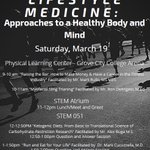
11th Annual @GroveCtyCollege
Exercise Science Symposium happening this Saturday March 14th @GCCExSci
gcc.edu/Home/News-Archive/Ne…

GCC Exercise Science retweeted
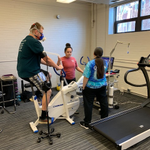
Proud to showcase our newly renovated Exercise Science facilities at Grove City College!
🏃♂️ Human Performance Lab
🧠 Functional Movement Lab
🌡️ Environmental Physiology Lab
Open to all B.S. Exercise Science students and our new M.S. in Kinesiology.
youtu.be/BoPIGod30Tk?si=qwEa…


GCC Exercise Science retweeted
New RCT from our lab: 30 trained runners did 5K/10K after ~1,000-kcal pre-race meals (LCHF vs HCLF). The meals produced distinct substrate oxidation profiles (↑ fat ox up to +77%, ↓ RER 5%), yet TT performance did not differ between conditions. mdpi.com/2072-6643/17/17/277…

GCC Exercise Science retweeted
New paper from our team just published. During >6 h at 69% VO₂max, a world-record Ironman triathlete shifted back to fat as the main fuel, despite >80 g/h carb intake. The Reverse Crossover Point challenges long-held beliefs about endurance metabolism frontiersin.org/journals/nut…

GCC Exercise Science retweeted
Our review paper written over 4 years and shortened and edited for the last year, has finally been accepted for publication in Endocrine Reviews. Just to give you a taste of what the article is all about, NotebookLM was invite to take a look at it (not by me), and this what it came up with.
dropbox.com/scl/fi/r4agifgm8…
Hope this will stimulate interest to read the article when it comes out in some months time.
@PhilipPrins11 @AKoutnik @sweatscience @LoreofRunning1 @davidludwigmd @zoeharcombe @PaulBLaursen @bigfatsurprise @theplews1 @nicknorwitz
