
Published Researcher. Conduct Clinical Trials. Research nitric oxide, ASCVD and endothelium chemistry. BlackBelt Fudoshin Bujutsu. Port Adelaide FC .
New South Wales, Australia
Joined March 2020
- Tweets16.5K
- Following3.3K
- Followers4K
- Likes11.4K







Pinned Tweet
My latest publication in the Australian Veterinary Journal.
Researched natural agents can provide efficacy

My explanation of Lp(a)HORIZON trial results
Summary:
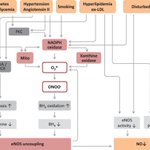
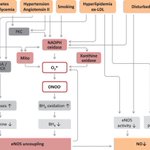
Lp( a) is shown to uncouple eNOS by superoxide production
Reduction of Lp( a) reduced total superoxide production but plenty of residual risk factor produced superoxide in these cohorts may have kept the net redox state above the threshold needed for meaningful recoupling, restoration of NO bioavailability, and interruption of lipoprotein retention chemistry.

Hi Borge
If looked at through the lens of coupled eNOS status on retention chemistry we may have an explanation
Elevated Lp(a) is linked to higher arterial superoxide production, primarily through eNOS uncoupling via reduced tetrahydrobiopterin (BH4) bioavailability, and this appears independent of ApoB.
academic.oup.com/eurheartj/a…
Classic risk factors also drive the same pathway:
Hyperglycemia/diabetes, obesity/adiposity, smoking, residual LDL (especially oxidized forms), and inflammation activate NADPH oxidases, mitochondrial ROS, and other sources.
The resulting superoxide and peroxynitrite oxidize BH4 to BH2, uncouple eNOS and further endothelial dysfunction and retention chemistry
ahajournals.org/doi/10.1161/…
In the Lp(a)HORIZON secondary prevention population the conventional risk factors were optimized
yet residual drivers of superoxide remained:
-Mean BMI 28.2–28.4
-Mean HbA1c 6.11–6.12% with 26–27% diagnosed type 2 diabetes
-14% current smokers
-Residual circulating Lp(a) still 64 nmol/L on pelacarsen
Reducing Lp(a) being one major contributor of superoxide in this trial
lowers total superoxide load…
….but if the other sources keep BH4 depleted and eNOS largely uncoupled, the net redox state may stay above the threshold needed for meaningful recoupling, restoration of NO bioavailability, and interruption of lipoprotein retention chemistry.
In established plaques the absolute incremental benefit over 4.7 years can therefore be small or undetectable.

Interesting …
The ‘nitric oxide pills’ were nitroglycerin but could this be emulated with inorganic nitrate supps?

Lying on a vibrating mattress for 40 minutes, combined with taking two pills that release nitric oxide into the body, enhanced the clearance of an Alzheimer's-related protein via the brain's waste-disposal system newscientist.com/article/259…

‘It’s the e̵c̵o̵n̵o̵m̵y̵ superoxide, stupid’
Noting that all the risk factors seem to have a shared mechanism of superoxide production…
Then …apart from one role of LLT being depriving a substrate to be retained and modified to make atherosclerotic plaque…
Is the other main mechanism of LLT simply reduction of superoxide secondary to LDL reduction?
( as opposed to the lesser lipid independent pleiotropic actions of one of the LLTs on eNOS)
Also noting in GLAGOV the net regression but still 35.7% plaque progression or similarly in Miami Heart paper 30% of cohorts with <70 mg/dL having plaque…maybe there’s another plank of treatment to be added looking closer at superoxide?
Plank 1:
lower risk factors which reduces their superoxide production
Plank 2:
LLT reduces LDL superoxide production
Plank 3:
Something that reduces superoxide at the source ( eg NADPH pathway which all the risk factors share)
Certainly large trials (HOPE etc) showed little or no benefit on cardiovascular events with Vit C and E
(Scavengers struggle to protect NO or prevent peroxynitrite formation unless present at very high local concentrations in which they can become pro oxidants
They also do not address the enzymatic sources of superoxide (NOX enzymes, uncoupled eNOS, mitochondria)
Maybe more research for this plank is warranted on:
-Polyphenol extracts with documented NOX effects and human FMD data (curcumin in bioavailable form, resveratrol, quercetin, cocoa flavanols, green-tea EGCG etc)
-MitoQ or CoQ10 for mitochondrial superoxide.
-Folate/5-MTHF to recouple eNOS and lower uncoupled-eNOS superoxide.
-Inorganic nitrate produced nitric oxide itself can ,at the early stage, inhibit NADPH pathway
Just food for thought ( possibly literally)

⬆️superoxide ➡️eNOS uncoupling➡️endothelial retention chemistry
Here’s a few papers showing LDL, similarly to the other risk factors, produces superoxide
Effect of native and oxidized low-density lipoprotein on endothelial nitric oxide and superoxide production : key role of L-arginine availability
pubmed.ncbi.nlm.nih.gov/1072…
‘Native low-density lipoprotein increases endothelial cell nitric oxide synthase generation of superoxide anion’
pubmed.ncbi.nlm.nih.gov/7543…
‘Endothelial NADPH oxidase: mechanism of activation by low-density lipoprotein’
pubmed.ncbi.nlm.nih.gov/1474…

1
108
More on nitric oxide and glycocalyx health
Hi David,
Reducing risk factors by pursuing metabolic health reduces the glycocalyx damaging superoxide pool…
…but also helps keep eNOS coupled to ensure adequate physiological endothelial nitric oxide levels that protects the glycocalyx in 5 ways
1/ In individuals whose eNOS remains largely coupled the chronic “always-on” stressors on the glycocalyx that @earthling is correctly referring to
(disturbed flow at branch points- but also aging and Lp(a) superoxide)
can be buffered.
Similarly damaged glycocalyx impaired mechano transduction shear stress signalling of eNOS can be buffered by a largely coupled eNOS with good functional reserve
The local superoxide load then stays below the threshold that degrades the glycocalyx enough to allow sustained LDL passage ,
This explains why we can often see no plaque in these prone regions
2/ Nitric oxide suppresses NADPH oxidases (S-nitrosylation of p47phox, HO-1 induction) meaning nitric oxide can inhibit the major superoxide production pathway all risk factors share
3/ Nitric oxide inhibits glycocalyx shedding enzymes
4/ Nitric oxide inhibits oxLDL formation
A less known fact is that the superoxide production by native LDL can only occur after it passes through the damaged glycocalyx and comes to the endothelial surface (all the other risk factors can produce superoxide intrinsically regardless of the health of the glycocalyx)
But the very small amount of oxLDL in the circulation can produce superoxide extrinsicly and damage the glycocalyx directly
5/ Nitric oxide inhibits AGE formation , is anti-inflammatory, anti-oxidative and anti- thrombotic
In summary understanding the interdependent, reciprocal and protective role of nitric oxide on the glycocalyx then gives us another weapon in our armoury for glycocalyx protection beyond and supporting reducing risk factors
⭐️Boosting endothelial nitric oxide with dietary inorganic nitrate or supplements
Importantly nitric oxide also inhibits endothelial retention chemistry for any LDL that does get through the glycocalyx
Good eNOS functional reserve also may explain no plaque with exposure to the risk factors including hypercholesterolemia for all these aforementioned reasons
As an example of what’s possible this paper shows nitrate supplementation reversing atherosclerotic IMT changes on a high fat high fructose diet whilst still eating it
anatomyafrica.com/index.php/…
This paper shows boosting eNOS function reverses atherosclerotic IMT changes in smoking rat model whilst still smoking
repository.unair.ac.id/13331…
In both these instances of atherosclerotic IMT reversal could we presume also glycocalyx integrity restoration?
Finally, this paper in the photos shows too little or too much nitric oxide degrades the glycocalyx with no other risk factors superoxide present
( too much supra physiological NO can uncouple eNOS )
@markkaplan20


One of the more comprehensive articles
Ageing modifies the oral microbiome, nitric oxide bioavailability and vascular responses to dietary nitrate supplementation
sciencedirect.com/science/ar…

Cant wait for home portable FMD devices to be available (wearable version technology also only a few years away)
Then we can immediately assay our diet, risk factor, supps and meds where we are concerned- our arteries
Possibly a much better assay of metabolic health than traditional markers which may not show endothelial reserve
Noting that endothelial dysfunction precedes atherosclerosis this would be great to help with primary prevention but also for secondary cohorts with existing plaque improving FMD% may help slow/ halt/regress/ stabilise plaque
This paper below shows the effects of some foods on endothelial function- imagine also applying it to your supps , meds and risk factor improvements to see what’s working or not.
Immediate readings also -don’t have to wait for a month for trends to be seen
The effects of whole foods and dietary patterns on flow-mediated dilation: a systematic review and meta-analysis of randomized controlled trials
pubmed.ncbi.nlm.nih.gov/4097…
This paper showing early endothelial dysfunction in FH children being detected by FMD - before any structural changes!
researchgate.net/publication…

3
290
Peter J Anderson retweeted

Health benefits of beetroot supplementation in older adults: A systematic review of blood pressure and functional implications
Highlights
▶️ Beetroot extract supplementation enhances nitric oxide bioavailability, which is vital for improving vascular health and mitigating age-related physiological decline in older adults.
▶️ Functional outcomes, such as knee extension velocity and maximal power, consistently improve with beetroot supplementation, while blood pressure results are variable.
▶️ Despite increases in plasma and urinary nitrate and nitrite levels, significant reductions in blood pressure were not observed, indicating potential limitations in cardiovascular benefits.
sciencedirect.com/science/ar… @_INPST
@nuclearball


Interesting
Lowering salivary pH with sugar-containing gum augments salivary nitrite production and blood pressure reduction with dietary nitrate (beetroot juice)
👉Our aim was to determine the acute relationship between salivary pH, salivary nitrite production, plasma [nitrite] and the BP-lowering effect of dietary nitrate, by altering salivary pH using sugar-containing chewing gum (vs. sugar-free chewing gum).
👉 Methods: We performed a 7-h crossover study, with 14 healthy volunteers consuming beetroot juice (Beet-It®, 70-mL, ~400-mg nitrate) and randomized to initially chew either sugar-containing acidic chewing (bubble) gum or sugar-free non-acidic chewing gum, with the alternate gum on the second visit.
👉Results: Sugar-containing gum decreased salivary pH by 1.4 ± 0.09 vs. sugar-free gum (p < .0001). While there was no significant effect on salivary nitrate secretion or plasma [nitrate], salivary nitrite production was increased by 45% (30.0 ± 11.0 μmol·h-1; [p < .01]), with plasma [nitrite] increasing by 25% (222.2 ± 50.3 nmol·L-1; [p = .0001]). Systolic and diastolic BP were decreased by 2.7 ± 0.5 and 1.9 ± 0.5 mmHg, respectively (both p < .0001).
👉Conclusion: Acutely lowering salivary pH (with sugar-containing gum) augments salivary nitrite production, plasma [nitrite] and BP-lowering with dietary nitrate. This mechanism has potential to enhance other nitrate-nitrite-NO pathway effects, for example, exercise performance.
pubmed.ncbi.nlm.nih.gov/4231…
eNOS function and great physiological endothelial nitric oxide is the heavy hitter in glycocalyx and endothelial integrity
Nitric oxide has a protective and reciprocal role
eNOS health and nitric oxide is the heavy hitter in protecting the wall (glycocalyx and endothelium)
Nitric oxide inhibits ox LDL ( and AGEs) but also has a reciprocal protective relationship with the glycocalyx including inhibition of shedding enzymes
Studies show too much or too little nitric oxide damages the glycocalyx independent of any other risk factors
( supra physiological nitric oxide can uncouple eNOS)
Risk factors can extrinsically damage the glycocalyx but uncoupled eNOS can damage the endothelium intrinsically in a healthy intact glycocalyx
Regardless of much increased LDL entry from a damaged glycocalyx via pathological junction cellular entry
…..Or hypercholesterolemia upregulated physiological trancytosis…..
…..Retention still decides what is retained and modified
-again much governed by nitric oxide ( inhibits/ controls PDGF and TGF-b stopping GAG chain elongation to bind with LDL - and much more)
-otherwise if not retained this increased damaged glycocalyx pathological and hypercholesterolemia physiological LDL entry and accumulation into the subendothelial space ….just exits again unremarkably as does > 99% of physiological normal
trancytosed LDL
Also the risk factors extrinsic glycocalyx damage that impairs mechano transduction signalling of shear stress eNOS initially only reduces nitric oxide which is not as damaging as intrinsic risk factor uncoupling of eNOS adding peroxynitrite to the mix for endothelial damage
A good functional reserve of eNOS can resist impaired shear stress reductions of nitric oxide and it’s later uncoupling
- this is also demonstrated by and is the explanation why that in bifurcation regions we permanently have disturbed / oscillatory flow ( read impaired shear stress) ….but can have no signs of plaque
The reality is that both extrinsic and intrinsic actions can occur concomitantly and feed into each other via the uncoupling loop also noting that the intrinsic superoxide and peroxynitrite can add to glycocalyx damage
In Summary its adequate coupled eNOS and good nitric oxide that is the heavy hitter for both glycocalyx and endothelial health
Re the fireman analogy:
This is only pertinent post retention to the processes to the LDL not LDL itself ( as Mark has described )
Pre retention I can’t see any helpful attenuating role of LDL produced superoxide in ASCVD ( not withstanding necessary systemic hormone and immune roles etc )
Inhibition of low-density lipoprotein oxidation by nitric oxide. Potential role in atherogenesis
pubmed.ncbi.nlm.nih.gov/8224…
Nitric oxide inhibits the formation of advanced glycation end products
pubmed.ncbi.nlm.nih.gov/1101…

3
18
1,834
The protective, reciprocal and independent role of nitric oxide on the glycocalyx
It is sometimes perceived that atherosclerosis is solely initiated by glycocalyx degradation from the extrinsic actions of the cardio metabolic risk factors on the glycocalyx.
These extrinsic actions from hyperglycaemia, AGEs, ROS, inflammation and hemodynamic mechanical actions from risk factors are certainly one route to atherosclerosis but it should be noted that all risk factors can uncouple eNOS intrinsically or intracellularly independent of the health or integrity of the glycocalyx thereby initiating and proliferating lipoprotein retention.
Extrinsic risk factor degraded glycocalyx with impaired mechanotransduction shear stress signalling results (initially) in less nitric oxide production….
Whereas uncoupling of eNOS instead creates superoxide and peroxynitrite in the endothelium- -much more damaging than just less NO
In the healthy intact glycocalyx with great shear stress signalling an uncoupled eNOS paradoxically can create superoxide and peroxynitrite from shear stress instead of nitric oxide
(which then can also degrade the glycocalyx furthering uncoupling and ROS production feeding into a viscious cycle loop)
Too little or too much nitric oxide can damage and degrade the glycocalyx independent of any extrinsic risk factor actions ( paper in attached photos)
Nitric oxide inhibits ET-1, shedding enzymes from MMP, ADAM and upstream signalling and regulation of Heparanase
-but is also a potent anti-thrombotic, anti-inflammatory and anti-oxidative agent.
Realistically extrinsic glycocalyx damage and intrinsic uncoupling of eNOS can both occur concomitantly
(The attached paper highlights the reciprocal actions of endothelial function/nitric oxide homeostasis and the glycocalyx)
Nitric oxide also inhibits all lipoprotein retention mechanisms downstream with a rate limiting step of atherosclerosis being retention of lipoproteins.
What this translates to is that a damaged degraded shedded glycocalyx can enable pathological (paracellular and junction) trancytosis increasing particle accumulation in the sub endothelial space … but it still needs retention
(greatly controlled by nitric oxide)
or these accumulated lipoproteins just exit unremarkably like the 99.9% of physiological trancytosed lipoproteins do.
The purpose of this post is to elaborate that glycocalyx degradation from risk factors is not necessarily a sole one directional mechanism of atherosclerosis and accordingly highlight the vital protective, reciprocal and independent role of nitric oxide with the glycocalyx upstream and also downstream in inhibiting and controlling lipoprotein retention chemistry as a main ‘gatekeeper’
(independent of increased pathological trancytosis from a damaged glycocalyx or increased physiological CAV-1 trancytosis from hypercholesterolemia or indeed LDL particle size.)
The best glycocalyx health may then be achieved by reduction of risk factors that both extrinsicly harm the glycocalyx and intrinsically uncouple eNOS and then feed into a loop of such.
I also note there is a new generation of glycocalyx and nitric oxide supporting agents available.
@Clint_OMeley @whitfieldlewis6 @JeffA000 @doctorsaluja @BradChilmeran
@EstebanDL
@LDLSkeptic @DrEricRodgers
@MaxGulhaneMD
@jcsbanks
‘Endothelial cell dysfunction and glycocalyx – A vicious circle’
sciencedirect.com/science/ar…


‘Our goal was to present the concept linking dysfunctional endothelium and glycocalyx in a vicious circle.
On the one hand, the loss of endothelial glycocalyx integrity provokes defective mechanosensing . On the other, mechano activation of uncoupled eNOS fails to generate NO and instead produces superoxide and peroxynitrite.
We predict that restoring one component of this circle should result in improved functioning of the other’


Friday fun question
I asked GROK to look at the 6 major ASCVD risk factors and rank them in order of superoxide production
(which can accumulate additively but then uncouple eNOS in a loop non linearly because of peroxynitrite production ….affecting endothelial retention chemistry )
Results:
Smoking , HTN, IR, Hypercholesterolemia, Aging, Lp(a)
(a few caveats about duration and interaction affecting superoxide production of course)
Full GROK answer :
There is no head-to-head human ranking of “how many superoxide molecules each isolated risk factor generates.” The literature instead shows that all six activate overlapping sources (NADPH oxidases, mitochondria, xanthine oxidase, and then uncoupled eNOS once BH4 is oxidized) and that they potentiate one another. The ranking below is therefore an inference from mechanism potency, experimental fold-changes, and how dramatically each factor impairs endothelial function when studied in relative isolation.
1. Smoking
You are right. Cigarette smoke delivers an enormous exogenous radical load and turns on endogenous generators (endothelial NADPH oxidase, mitochondrial ROS, and oxidation of LDL into a more potent NOX activator). BH4 depletion and eNOS uncoupling are well documented even after a single cigarette. Nothing else on the list matches that combination of direct oxidant delivery plus amplification.
2. Hypertension
Angiotensin II is one of the strongest physiologic activators of vascular NADPH oxidase (roughly 2.5–3-fold rises in O₂•⁻ in classic cell and infusion studies). Mechanical stretch adds another stimulus. Comparative oxidative-stress marker studies often put hypertensives at the top among traditional risk-factor groups. The resulting vicious cycle (O₂•⁻ → less NO → higher pressure → more Ang II/NOX) is particularly efficient at uncoupling eNOS.
3. Insulin resistance
Nox2 is repeatedly identified as the dominant endothelial source in IR models; mitochondrial superoxide from substrate overload (glucose + FFA) and reduced de-novo BH4 synthesis add two more streams. Hyperinsulinemia itself can further induce Nox2. The net effect on the endothelium is large and occurs early, before frank diabetes.
4. Hypercholesterolemia
Classic rabbit data showed an approximately threefold increase in endothelial superoxide; both native LDL and especially oxLDL stimulate NOX and uncouple eNOS. Hypercholesterolemia also up-regulates AT1 receptors, so it borrows some of hypertension’s Ang-II/NOX machinery. Strong, but more “particle-plus-oxidation” than the acute enzymatic burst of smoking or Ang II.
5. Aging
Documented 2–3-fold rises in vascular superoxide (mitochondria + NOX2/4 + uncoupled eNOS). Relentless and universal, yet slower and more cumulative than the four modifiable factors above. Antioxidant defenses also decline, so the same amount of superoxide does more damage.
6. Lp(a)
Recent arterial-biopsy work shows genetically higher Lp(a) raises arterial superoxide mainly by oxidizing BH4 and uncoupling eNOS (OxPLs are the likely culprit), with little extra NOX activity and independent of ApoB. It is causal and clinically important, but the superoxide increment looks more targeted and smaller in bulk than the multi-source firestorms of smoking, Ang II, or IR.
Important caveats
• Severity and duration matter more than the label: 60 pack-years dwarfs mild isolated hypertension; extreme Lp(a) plus aging is not trivial.
• They never act alone. Smoking oxidizes LDL, hypercholesterolemia up-regulates AT1 receptors, IR raises blood pressure, aging impairs every antioxidant system.
• The ranking is about superoxide generation that can uncouple eNOS, not about overall ASCVD hazard (ApoB particle number, thrombosis from Lp(a), etc.).
So the superoxide-centric order is:
Smoking > HTN > IR > Hypercholesterolemia > Aging > Lp(a).
ahajournals.org/doi/10.1161/…

Nitric oxide stabilises plaque whilst inhibiting calcification
Nitric oxide donor molsidomine favors features of atherosclerotic plaque stability and reduces myocardial infarction in mice
sciencedirect.com/science/ar…
Anti inflammatory actions of inorganic nitrate stabilize the atherosclerotic plaque
pmc.ncbi.nlm.nih.gov/article…
Nitric oxide regulates vascular calcification by interfering with TGF-β signalling
academic.oup.com/cardiovascr…
Nitric oxide prevents aortic valve calcification by S-nitrosylation of USP9X to activate NOTCH signaling
pmc.ncbi.nlm.nih.gov/article…
2
233
‘Dietary inorganic nitrate reverses features of metabolic syndrome in endothelial nitric oxide synthase-deficient mice’
👉Attempts have been made to identify a common underlying molecular mechanism that can explain the various features of metabolic syndrome .
One such candidate mechanism, linking metabolic and cardiovascular disease in humans, is a defect in endogenous synthesis and bioavailability of nitric oxide (NO).
👉 eNOS-deficient mice display many of its defining features, including hypertension, dyslipidemia, insulin resistance, and increased weight gain
👉 recent lines of research have surprisingly demonstrated the existence of a reverse pathway where nitrate acts as a substrate for NO generation
👉 Administration of nitrate or nitrite (NO2−) to humans and rodents is clearly associated with NO-like bioactivity, as demonstrated by increases in cGMP formation , vasodilatation , reduction in blood pressure , inhibition of platelet function , and protection against ischemia-reperfusion injury
👉 From the glucose challenge test it is clear that the eNOS-deficient mice had a prediabetic phenotype and nitrate was remarkably effective in reversing this.
👉 Recent studies show that the same dose of nitrate used here (0.1 mmol·kg−1·d−1) is sufficient for induction of NO-like bioactivity in humans, including a robust reduction in blood pressure, inhibition of platelet aggregation, and improvement of endothelial function
pnas.org/doi/10.1073/pnas.10…

Head-to-head comparison of inorganic nitrate and metformin in a mouse model of cardiometabolic disease
With thanks @bethshirley77
👉Unhealthy dietary habits contribute to the increasing incidence of metabolic syndrome and type 2 diabetes (T2D), which is accompanied by oxidative stress, compromised nitric oxide (NO) bioavailability and increased cardiovascular risk
👉Favourable cardiometabolic effects have been demonstrated following dietary nitrate supplementation to boost the nitrate-nitrite-NO pathway. Here we aim to compare the therapeutic value of inorganic nitrate and metformin alone and their combination in a model of cardiometabolic disease.
👉Both nitrate and metformin improved insulin/glucose homeostasis, whereas only nitrate had favourable effects on cardiovascular function and steatosis.
👉Mechanistically, metformin and nitrate improved AMPK signalling, whereas only nitrate attenuated oxidative stress.
👉Combination of nitrate and metformin reduced HbA1c and trended to further increase AMPK activation.
sciencedirect.com/science/ar…
