
Director for Mesoamerica and the Caribbean @TheWCS The month I was born, atmospheric CO2 was at 328 ppm. Opinions expressed are solely my own.
Joined November 2010
- Tweets3.1K
- Following369
- Followers255
- Likes7.4K






jeremy radachowsky 💚🌱 retweeted

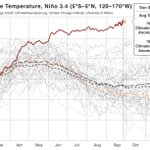
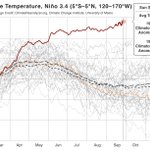
5 de octubre de 2026 la temperatura del Océano Pacífico en la región conocida como 3.4 llegó por primera a vez en la historia a 30ºC.
No hay años análogos, lo que complica las proyecciones.
5 anomalías climáticas y posible Niño Muy Fuerte más adelante ('26-'27)
Adaptarnos ya!
jeremy radachowsky 💚🌱 retweeted

"Five Central American Forests Support Major Shares of North American #Songbird Populations" | By Daniel Garcia for The Pulse
“Every hectare we protect in #CentralAmerica has ripple effects for #birds and people across the hemisphere." —Anna Lello-Smith
ecoportal.net/en/north-ameri…

jeremy radachowsky 💚🌱 retweeted

Trump Pledges That If Voters Defeat Socialism In November, They Will Each Get An Equal Redistribution Of Wealth From The Government buff.ly/kRXF5x9

Today’s global air temperature and sea surface temperature are the hottest ever recorded for the end of August. And we are heading into an El Niño of unprecedented proportions. Happy weekend!
jeremy radachowsky 💚🌱 retweeted

Un parque nacional puede ser la diferencia entre perder una especie o darle una oportunidad de seguir volando.
En Guatemala, la Reserva de la Biosfera Maya es el último gran refugio de la guacamaya roja. Dentro de este territorio, el Parque Nacional Laguna del Tigre conserva algunos de los sitios más importantes para su reproducción.
Aquí, los equipos de conservación monitorean nidos, revisan la salud y el desarrollo de los pichones y atienden a aquellos que difícilmente sobrevivirían por sí solos.
La especie sigue enfrentando amenazas como los incendios forestales, la ganadería ilegal, la deforestación y la usurpación de tierras dentro del área protegida.
“Aún hay esperanza para rescatar a esta especie y muchas otras”.
En este Día Internacional de los Parques Nacionales, destacamos el papel de las áreas protegidas de Guatemala para conservar especies y los ecosistemas de los que dependen.
🎥 Video por @FMesoamerica
#ParquesNacionales #Guatemala #GuacamayaRoja #LagunaDelTigre #ReservaDeLaBiosferaMaya #Conservación #Biodiversidad
@TheWCS @Guatemala_WCS
jeremy radachowsky 💚🌱 retweeted
"Contraband Cattle Are Spreading the Screwworm" | By @DonavynCoffey for @OffrangeAg
“The screwworm is one of the most innocent things that could have been transmitted through illegal cattle. To me, we should be taking this as a warning about what the next transmissible disease could be.”—Jeremy @Radachowsky
ambrook.com/offrange/livesto…

jeremy radachowsky 💚🌱 retweeted

I'm not sure folks have realized just how crazy the second half of 2026 and 2027 will be for global temperatures – on the back of a record-smashing El Niño event. Here is my latest estimate of where both years will end up compared to global temperatures since 1850.

jeremy radachowsky 💚🌱 retweeted

Check out this vertical. Our camera trap recently caught a jaguar’s near miss at an artificial watering hole in the Maya Biosphere Reserve in Guatemala.
You may recall, as droughts intensify, the water has been placed to provide relief. Wildlife videos are a lucky byproduct.
Why is explosive Taco Bell diarrhea receiving more media attention than explosive and unprecedented global climate anomalies?
jeremy radachowsky 💚🌱 retweeted

PN Laguna del Tigre, Guatemala.
Nuestro trabajo científico demuestra que los pecaríes son una de las presas más importantes para los jaguares, recordándonos que conservar al depredador también implica conservar todo el ecosistema que lo sostiene.
besjournals.onlinelibrary.wi…

jeremy radachowsky 💚🌱 retweeted
It's not just a livestock issue. It's also a threat to wildlife.
While the focus has rightly been on protecting livestock production, a new study highlights two risks we can no longer afford to ignore: the impact of New World screwworm on wildlife and the role of illegal cattle movements in driving its spread.
Infestations have already been documented in species such as tapirs and pumas, among others of conservation concern. Yet protected areas and remote landscapes remain, to a large extent, blind spots for surveillance.
Wildlife is not driving the outbreak. It is one of its victims—and it can also help us identify where the risk is emerging.
📖 Read the full story to learn why the response must include wildlife, protected areas, and a One Health approach: programs.wcs.org/5greatfores…
@TheWCS
#OneHealth #NewWorldScrewworm #Wildlife #Conservation #WCS

jeremy radachowsky 💚🌱 retweeted
No es solo un problema del ganado. También es una amenaza para la fauna silvestre.
Mientras el foco está puesto en proteger la producción pecuaria, un nuevo estudio revela dos riesgos que no podemos seguir ignorando: el impacto del gusano barrenador en la vida silvestre y el papel del movimiento ilegal de ganado en su propagación.
Ya se han documentado infestaciones en especies como tapires y pumas, entre otras de importancia para la conservación. Sin embargo, las áreas protegidas y los paisajes remotos siguen siendo, en gran medida, puntos ciegos para la vigilancia.
La fauna silvestre no está impulsando el brote. Es una de sus víctimas y también puede ayudarnos a identificar dónde está emergiendo el riesgo.
📖 Lee la nota completa y conoce por qué la respuesta debe incluir a la fauna silvestre, las áreas protegidas y un enfoque de Una Sola Salud (One Health): dub.sh/gusano-barrenador-fau…
#OneHealth #GusanoBarrenador #FaunaSilvestre #Conservación #WCS
@TheWCS @Guatemala_WCS @WCSBelize


jeremy radachowsky 💚🌱 retweeted

Independent Cattle Producers Urge USTR to Apply Section 301 Tariffs to Brazilian Beef r-calfusa.com/independent-ca…

jeremy radachowsky 💚🌱 retweeted
Deadly #Screwworm Threatens U.S. Cattle Herd as Cases Climb | By @IlenaPeng in @LATimes
Screwworm hotspots are appearing along known #cattlesmuggling routes from #Nicaragua through Honduras and #Guatemala into #Mexico.
latimes.com/business/story/2… @radachowsky #conservation

jeremy radachowsky 💚🌱 retweeted
The deadly New World screwworm is spreading through Texas, writes @Bloomberg, and it poses a significant risk to U.S. cattle.
We won’t get a handle on it, says WCS’s @radachowsky, unless we address illegal cattle movement.
bloomberg.com/news/articles/…

jeremy radachowsky 💚🌱 retweeted

America spent $800M and 60 years eradicating screwworm. Cartels reseeded it in 2.5 years — 800,000 smuggled cattle a year, fake tags, zero inspections.
USDA's answer? $100 million for drones to surveil American cattle.
Not the cartels. Us.
Read more👇 beefnews.org/sixty-years-cle…

jeremy radachowsky 💚🌱 retweeted

Screwworm reemergence, illegal cattle movements, and emerging risks to wildlife and protected areas in Mesoamerica doi.org/10.1111/cobi.70333

jeremy radachowsky 💚🌱 retweeted
7 confirmed cases of screwworm. Yesterday it was 5. The day before, 3. Two states. All originating from cartel-controlled ranches south of the border.
BeefMaps.com has been tracking cartel cattle corridors for over a year. Now screwworm is in Texas. The parasite moved through the same routes the cattle did.
InSight Crime confirmed it: outbreak hotspots mirror the smuggling routes. 800,000 head a year smuggled through Mexico with falsified paperwork, no quarantine, no traceability.
CJNG doesn't just extort ranchers — they charge 5 pesos per kilo on export animals. They access live herd data through RFID tags. They run regional managers embedded in Mexico's legal export system.
Cattle bought for $650 in Central America, resold for $1,500 in Texas. A $1.2 billion shadow market.
The parasite isn't the only thing hiding in plain sight.
The "Product of USA" rule changed in January. Packers can now only use that label if the animal was born, raised, harvested, AND processed in the US. The old loophole where imported beef got stamped "Product of USA" just for being processed here? Gone.
But it's still voluntary. Packers don't have to tell you anything. They can just leave the label off. Imported beef from cartel corridors can sit in your grocery store with zero origin disclosure.
MCOOL — mandatory country of origin labeling — would fix that. Every cut, labeled. Born where. Raised where. Slaughtered where. No exceptions.
H.R. 5818 is sitting in Congress right now.
The screwworm made this urgent. The cartel corridors made it obvious.
jeremy radachowsky 💚🌱 retweeted
Flesh-eating screwworm has reached the US—a comeback driven by organized crime, writes @CNN.
We need governments to shut down illegal cattle ranching, says WCS’s @radachowsky.
cnn.com/2026/06/11/americas/…
