Rising BD Alert🚨: Independent news media delivering urgent 📰updates on Bangladesh's political resurgence, minority rights, and 1971 legacy. 🇧🇩

USA
Joined October 2019
#AllEyesOnTuRaag : Allegations of Cover-Up in Turag River Killings Surface📍 According to credible sources, a DGFI team has been present at Turag Police Station all day in connection with the killings of Chhatra League and Jubo League activists. Their bodies were allegedly dumped in the Turag River. Police reportedly contacted families of the three recovered victims, pressuring them to file "unnatural death" (UD) cases instead of proper murder complaints. Senior BNP-led government figures are said to have involved the Bangladesh Army and DGFI to "resolve" the matter quietly. A press conference is reportedly scheduled for tomorrow, where families are expected to speak under possible influence. This raises serious questions about attempts to conceal politically motivated killings. We demand: ▫️ Full transparency and independent investigation. ▫️ Justice for the victims and their families. ▫️ An end to political violence and cover-ups. ▫️ Rule of law, not suppression. Stand with Awami League (@albd1971) leaders, activists, and all victims of injustice. Raise your voice against this brutality. Bangladesh deserves truth and accountability. #TuragRiverKillings #JusticeForVictims #StopPoliticalViolence #AwamiLeague #Bangladesh #RuleOfLaw #HumanRights @amnestysasia @pen_int @HRF @DRL_AS @article19org @hrw @Irenekhan @Ginitastar @AFP @MujMash @anbarasanethi @AP @HannahEP @ReutersAsia @WSJ @TheDavidBergman @cnni @BBCWorld @dwnews @NPR @ESandersFCDO @PearsonElaine @bbcwritersroom @StateDRL @FCDOHumanRights @EURightsAgency @kajakallas @State_SCA @EUinBangladesh @GwynLewis12 @UNHumanRights @volker_turk @amnesty @AgnesCallard @guardian @eu_eeas @HumanRightsCtte @SecRubio @MEAIndia @DrSJaishankar @DavidLammy @FCDOGovUK @GERonSouthAsia @fidh_en @UNinBangladesh @UKinBangladesh @usembassydhaka
3
8
2
8
455
Rising BD Alert retweeted
Government Failure and Impunity: The Surge in Violence Against Women and Girls in Bangladesh: 2,404 victims in nine months of 2026, and perpetrators who go unpunished.
⁨📷⁩ ⁨Government Failure and Impunity: The Surge in Violence Against Women and Girls in Bangladesh 2,404 victims in nine months of 2026, and perpetrators who go unpunished By Raudra Rudra Political and Security Analyst Since the political upheaval of 5 August 2024, the women of Bangladesh have faced a harsh reality. Under the government of former Prime Minister Sheikh Hasina, mothers and daughters could move safely at home and in public. Strict state oversight and a zero-tolerance policy meant that offenders could not expect to escape punishment. Today, that sense of security is gone. Violence is rising, and justice is absent. ▪️ The Numbers: A Rising Tide of Violence According to a report by the Human Rights Support Society (HRSS), between January and September 2026, 2,404 women and girls in Bangladesh were subjected to violence. Of these, 657 were raped, including 392 children and adolescents. During the same period, 130 women were gang-raped, and 29 women were murdered after being raped. Another 693 women were sexually harassed. Domestic violence killed 457 women and injured 279, while 213 were driven to suicide. Dowry-related violence killed 32 women and injured 35. In addition, 1,810 children were subjected to violence: 494 were killed, and 1,316 suffered physical or psychological abuse. Roughly 60 percent of rape victims were children or adolescents. HRSS also reports that 1,621 women and girls were abused in the first six months of 2026 alone, about 56 percent more than in the same period of the previous year. The situation is not only grave; it is considerably worse than a year ago. The Bangladesh Mahila Parishad's 2025 monitoring found a similar pattern: of 786 documented victims of rape and gang rape, 543 (about 69 percent) were under 18. Because stigma, fear, and the expectation of being denied justice keep many survivors silent, the true scale is likely to be far higher. ▪️ The Government's Failure to Protect Protecting women and children is the most basic duty of any government. Yet the illegitimate BNP government has left that duty unfulfilled through its inaction, its political patronage of offenders, and its administrative indifference. The culture of impunity that took hold after 5 August has grown bolder under the current government. Its consequences, passivity in law enforcement and political protection for perpetrators, are visible in women's lives every day. ▪️ A Culture of Impunity When offenders know that punishment is uncertain, they are emboldened. This impunity now shadows every part of women's lives. The home should be a refuge, yet 457 deaths and 213 suicides linked to domestic violence show that laws exist on paper but are not enforced. Schools, universities, and workplaces are also unsafe. According to Ain o Salish Kendra (ASK), mob violence killed 197 people in 2025 alone, and women and children are among the easiest targets for an enraged crowd. Online, too, women have no refuge: doxxing, AI-generated deepfake images, character assassination, and rape threats are being used to silence and confine women's rights activists, teachers, and journalists. A society in which mothers and sisters are this exposed has little claim to freedom or democracy. ▪️ A Call to the International Community Bangladesh is a state party to the Convention on the Elimination of All Forms of Discrimination against Women (CEDAW) and the Convention on the Rights of the Child. These treaties oblige the state to protect women and children from violence and to ensure that perpetrators are brought to justice. In the absence of accountability, those commitments have become promises on paper. We therefore call on the Office of the United Nations High Commissioner for Human Rights, the UN Special Rapporteur on Violence Against Women and Girls, the CEDAW Committee, UN Women, Amnesty International, Human Rights Watch, and all human rights organizations to: - independently investigate and monitor violence against women and children in Bangladesh; - hold the government accountable for the culture of impunity; - play an active role in providing legal, psychological, and social protection to survivors. ▪️ From Protest to Resistance Candlelight vigils and silent protests cannot end this brutality. Protest only announces an injustice; resistance prevents it from happening. Resistance means stopping rapists and abusers and closing every door of society to them. It means standing beside survivors with legal, social, and psychological support, so that no one has to fight alone. It means socially boycotting perpetrators and their political patrons, so that they find refuge nowhere. No more silence, no more mere lamentation. The mothers and daughters of Bangladesh will no longer only protest; they will resist. We urge the world's conscience to stand with the women of Bangladesh. Our struggle will not stop until this force of oppression is eradicated.⁩ #Bangladesh #ViolenceAgainstWomen #WomenSafety
4
8
47
2,059
Rising BD Alert retweeted
Death Threats for Seeking Justice - Welcome to BNP’s Bangladesh Filing a case after your business is attacked should not come with a death threat. Yet in the capital, the manager of AJR Courier is told: settle or your body will be left on the street. This is not an isolated crime. This is what happens when a government loses control of the streets and abandons those who dare to seek legal protection. Ordinary citizens and business owners are now left to choose between silence and risking their lives. BNP’s failure is no longer a political talking point - it is a daily threat to life and property. Read more: bddigest.news/news/61693/ #Bangladesh #BangladeshCrisis #BNP
8
23
891
Rising BD Alert retweeted
#Bangladesh's Top #Cop Openly Advocates Extrajudicial Killings in the Name of Maintaining Law and Order. "If the government allows, we won't hesitate to use crossfire to control the law and order situation." This alarming statement was reportedly made by Bangladesh's Inspector General of #Police (IGP), Md. Ali Hossain Fakir, at an event in #Chattogram on Monday, 26 October 2026. Source: @dbcnews_tv In Bangladesh, the term "crossfire" has long been associated with a notorious practice of extrajudicial killings, in which deaths at the hands of law enforcement agencies are presented as the consequences of supposed armed encounters or exchanges of gunfire. The term is not merely a euphemism. It carries a deeply troubling history of alleged summary executions, fabricated encounters, and the systematic denial of due process and accountability. Against this backdrop, the IGP's remarks amount to an apparent endorsement of extrajudicial killings by the country's highest-ranking police official, subject only to government authorisation. This raises a fundamental question: Since when does government permission make an extrajudicial killing lawful? No government can legitimately authorise law enforcement agencies to bypass the courts and execute individuals suspected of criminal activity. The right to life, the presumption of innocence, and the right to a fair trial are fundamental legal protections, not privileges that can be suspended at the discretion of the executive. Beyond the grave #humanrights implications, there is no credible basis for treating extrajudicial killings as an effective or sustainable solution to deteriorating law and order. Such practices risk encouraging impunity, undermining public trust in the police, and further weakening the rule of law. Rather than advocating a return to a discredited and abusive practice, the IGP should focus on addressing the structural problems undermining law enforcement in Bangladesh. These include the lack of professionalism within policing institutions, overt political interference, #corruption, weak #accountability mechanisms, misuse of law enforcement resources to target political opponents of the government, and failures in criminal investigation and prosecution. Bangladesh does not need more extrajudicial killings. It needs professional, impartial, accountable, and effective law enforcement. #Bangladesh #HumanRights #RuleOfLaw #ExtrajudicialKillings @hrw @amnestysasia @IBAHRI @ESandersFCDO @Kennedy_HRC @SRjudgeslawyers @omctorg
1
10
3
16
830
Rising BD Alert retweeted
The @medwma condemns the latest attack on a hospital in Savar, #Bangladesh. Violence against healthcare puts patients and health personnel at risk and undermines trust in care. Recently, the WMA urged the Bangladesh government to protect health personnel, investigate every attack and address the root causes of this violence. No #physician should have to fear for their safety. We renew that call today. Read the full press release here: wma.net/news-post/world-medi… #HealthCareInDanger #ProtectHealthCare #Bangladesh
1
1
36
🚨 Billion-Dollar Boeing Deal Amid Economic Hardship? ✈️ At a time when Bangladesh’s economy is struggling with slowing growth, persistent inflation, and falling purchasing power, the current government is pursuing a multibillion-dollar Boeing aircraft deal. FY2025 GDP growth is estimated at just 3.7% , while inflation is projected at 9.2% in 2026. Ordinary families are already struggling to afford basic necessities. Yet instead of prioritizing recovery, job creation, and relief, the government is making massive financial commitments without clear explanations on affordability, financing, or long-term costs. A reported $7.2 billion aircraft purchase is drawing scrutiny when millions are under severe cost-of-living pressure. Critics note that under Sheikh Hasina, Bangladesh pursued major international partnerships while protecting strategic interests. The Awami League is now demanding transparency, fiscal responsibility, and policies that put the welfare of ordinary Bangladeshis first. #EconomicCrisis #Inflation #CostOfLiving #BoeingDeal #FiscalResponsibility #Bangladesh #BreakingNews @albanalvarez @NavoditaKumari @meghnabali @bhattburhan02 @patidarsom @SreenivasanJain @Keshav_Paddu @ToraAgarwala @ShonalGanguly @rishilekhi @Sheikh_Saaliq @AnupamN02017958 @char1scarr @sanjayganguly @AakritiThapar @yogital @StoriesByShalu @andrewclarance @premboom @shariqueahmad_ @caroledieterich @IndiraGuerreroR @luuciagoni @marcomasciaga @PreetaTweets @pritamroybbc @shrutimenon10 @Azadeh_Moshiri @AamirPeerzadaa @petermartell @netizenmay @AmlerFranziska @cyrus_naji @arjuna_ham @jugalrp @raghvendra_rao @PhilippeAlfroy
1
1
13
Rising BD Alert retweeted
At a time when Bangladesh’s economy is struggling with slowing growth, persistent inflation, and declining purchasing power, the current government is pursuing a multibillion-dollar Boeing aircraft deal. With FY2025 GDP growth estimated at just 3.7% and inflation projected at 9.2% in 2026, ordinary Bangladeshis are already bearing the burden of economic hardship. Instead of prioritizing economic recovery, job creation, and relief for struggling families, the government is making enormous financial commitments without adequately explaining their affordability, financing arrangements, or long-term implications. A reported $7.2 billion in aircraft purchases demands serious scrutiny when millions of citizens are struggling to afford basic necessities. Under Sheikh Hasina, Bangladesh pursued major international partnerships while maintaining strategic relationships with competing global powers. The current government must demonstrate the same commitment to protecting Bangladesh’s economic interests. The Awami League demands transparency, fiscal responsibility, and an economic policy that puts the welfare of the Bangladeshi people above costly political announcements. #EconomicCrisis #Inflation #CostOfLiving #EconomicAccountability #FiscalResponsibility #PeopleFirst #BangladeshPolitics #SheikhHasina
9
23
1,089
🚨 Nearly Half of Bangladesh’s Households Are Trapped in Debt! 🇧🇩 According to the BBS Living Standard Survey 2025, 47.42% of households across the country are in debt as rising living costs continue to outpace incomes. Rural households are facing an even heavier burden. For many families, borrowing is no longer a choice — it has become a means of survival. With the gap between income and the cost of living widening, ordinary Bangladeshis are under growing financial pressure. How long can this continue? #CostOfLiving #PriceHike #Bangladesh #DebtCrisis #Economy #BreakingNews @AA0FAISAL @JannatSami99212 @AwanShikder @k_shayera @perfectbangali @SarwarWassel @AhmedFaisalbabu @Asifurrahman71 @crack1971 @CrackPlatoonBD @akashofficial40 @AppyApps2781987 @alliance_1971 @al_amin_rahman1 @Joy7Bangla @JoyBangla007 @JoyBangla2_0 @NextFightBD @sumon_tarek @M_Azhar68545 @sanjibdeb2016 @niru_nahar @shahadatdhk @SyedHas85448978 @Helal_12_16_71 @aminulhoque1971 @CyberGroupBD @ATeam_1971 @NextGenAwami @ImbusyWarrior @imSujanDatta @Redowanshakil @saddamhussainbd @Kohale_quddus_m @Tomalika_kundu @Spirit_of_1971_ @Sparrow_Revolt @sanjibdeb2016 @albd1971 @MazUk123 @farhanaendra88 @MAarafat71
🇧🇩 Nearly Half of Bangladesh’s Households Are Trapped in Debt! According to the BBS Living Standard Survey 2025, 47.42% of households are in debt as rising living costs outpace incomes. With rural households facing an even heavier burden, borrowing is increasingly becoming a means of survival, not a choice. How long can ordinary Bangladeshis sustain this widening gap between income and the cost of living?⁩ #CostOfLiving #PriceHike #Bangladesh
2
5
121
Rising BD Alert retweeted
🇧🇩 Nearly Half of Bangladesh’s Households Are Trapped in Debt! According to the BBS Living Standard Survey 2025, 47.42% of households are in debt as rising living costs outpace incomes. With rural households facing an even heavier burden, borrowing is increasingly becoming a means of survival, not a choice. How long can ordinary Bangladeshis sustain this widening gap between income and the cost of living?⁩ #CostOfLiving #PriceHike #Bangladesh
1
13
4
41
2,182
Rising BD Alert retweeted
🚨 Breaking News 🚨 In Lakshmipur’s Chandraganj, police have arrested a madrasa teacher over allegations of prolonged sexual abuse of a 9-year-old residential student. Maulana Ibrahim, a teacher at Ehyaul Ulum Hafizia Madrasa in Mandari Union, was detained on Saturday after the child’s mother filed a complaint. The mother said she enrolled her son so he could become a Hafiz of the Quran; he has already memorized four paras. She alleges two people repeatedly abused him. The second accused, identified as the son of the madrasa’s principal, remains at large. Police confirmed the arrest and said a case has been filed. The accused will be produced in court. The child’s mother has demanded a proper investigation and strict punishment for those responsible. #Lakshmipur #CrimeNews #Madrasa #ChildAbuse #SexualAbuse #Bangladesh #BreakingNews #Justice @Hindubd49346 @HindutvaITCell @ItzBDHindus @TeamHinduUnited @avarakai @DeepSen06037683 @ElephantSignal @imSujanDatta @IndiaUnleashed_ @mr_mayanksolank @AadiAchint @ajaykraina @defencealerts @desishitposterr @NetramDefence @sanjibdeb2016 @BjpBiplab @DrSJaishankar @FrontalForce @Goreunit @IndiaBh67135419 @Gen_VKSingh @JournoAshutosh @SouleFacts @karma28852 @KreatelyMedia @Tomalika_kundu @LevinaNeythiri @NaomiNoor1510 @NijhoomMajumder @NiharikaHindu @karan_neil @nahidrains @bdinsights71 @col_chaubey @republic @Republic_Bharat @Reuters @RT_India_news @ANI @WIONews @BBCNews @DDIndialive @Chellaney @sanjibdeb2016 @Kvdogra888 @gappi7276
1
2
34
Two Bangladeshi citizens, Nazrul Islam Abdul Basir and Sweety Akhtar, were executed in Saudi Arabia on October 14. Bangladesh reportedly learned of their executions only afterward, despite their names appearing on a prisoner list shared with its consulate. Instead of answers and accountability, BNP’s Foreign Affairs State Minister Shama Obaed reportedly called the executions a “major lesson for us.” A lesson? Two lives are gone. Where was the government’s intervention to save them? Now BNP seeks closer alignment through the Mecca Defence Pact. What does that mean for millions of Bangladeshi migrant workers if the government cannot ensure timely consular attention and legal assistance for citizens facing execution? No more silence. No more lessons after lives are lost. BNP must explain what went wrong and what concrete safeguards it will establish to prevent similar tragedies. #Bangladesh #HumanRights #MigrantWorkers #BangladeshCrisis
1
10
21
471
Rising BD Alert retweeted
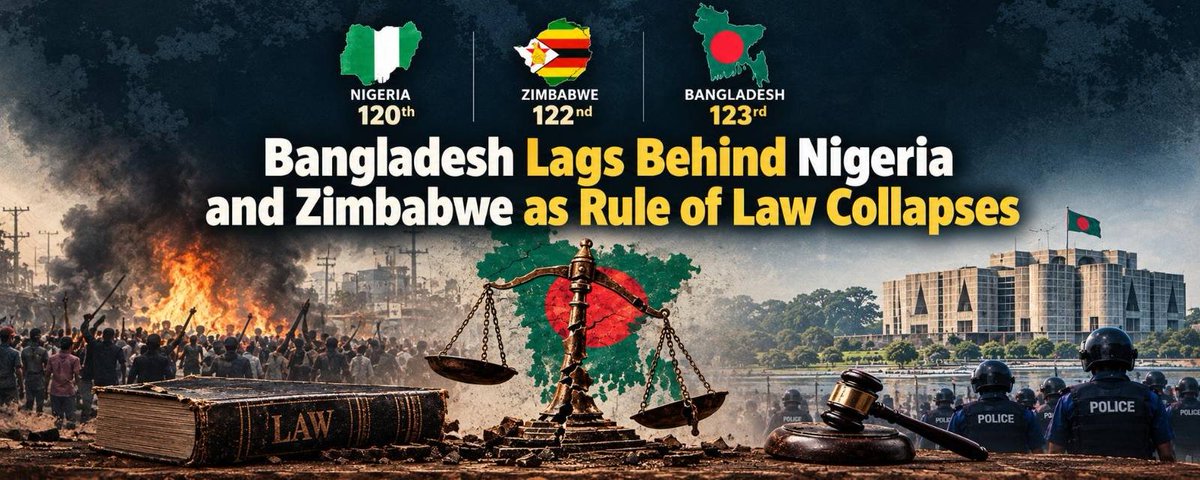
Bangladesh ranks 123rd out of 143 in the WJP Rule of Law Index 2026, behind Nigeria and Zimbabwe. Mob violence, political clashes and persistent law-and-order concerns raise serious questions about institutional accountability.
9
40
2,183
Rising BD Alert retweeted
Bangladesh Awami League strongly condemns the death of Jubo League leader Sohorab Hossain in Bogura District Jail and demands an independent, transparent investigation into the circumstances surrounding his death. According to Ain o Salish Kendra (ASK), 102 people died in jail custody between January and September 2026, including 60 awaiting trial. ASK also recorded 16 deaths involving law-enforcement agencies during the same period. These alarming figures demand urgent scrutiny and accountability. Every death in custody must be independently investigated, and no suspicious death should be dismissed without answers. Bangladesh Awami League demands justice for Sohorab Hossain and all victims of custodial deaths. Political vengeance, abuse of state power, and a culture of impunity must end. The government must uphold the rule of law and protect every person's fundamental rights. No one should lose their life in state custody without accountability. #Bangladesh #HumanRights #Justice #BangladeshCrisis
2
23
61
3,872
Rising BD Alert retweeted
BANGLADESH'S GARMENT INDUSTRY IS BLEEDING BILLIONS. WHERE IS THE BNP GOVERNMENT'S ANSWER? Bangladesh's garment exports to the European Union plunged 11.67% in just eight months, wiping out approximately €1.58 billion in export earnings. While Bangladesh loses ground, China and Vietnam are gaining it. This is not a minor statistical setback. It is a warning about the competitiveness of the industry that sustains millions of livelihoods and brings Bangladesh billions in foreign exchange. The BNP government cannot keep hiding behind political slogans while the country's economic lifeline comes under mounting pressure. When export earnings collapse, jobs, wages, foreign exchange, and economic stability are all at risk. Bangladesh needs urgent action - not excuses, not propaganda, and certainly not complacency. #BangladeshEconomy #GarmentIndustry #BNPGovernment #ExportCrisis
7
24
77
13,816
Rising BD Alert retweeted
Another foreign trip, another embarrassment? Tarique Rahman’s Japan trip is yet to begin, yet the diplomatic questions have already started. Why is the ambassador being kept away? Who made the decision? And what is the government not telling us? A trip meant to showcase leadership is already struggling to showcase competence. #Bangladesh #ForeignPolicy #MoFA #Japan
2
17
1
67
9,946
Rising BD Alert retweeted
Female Awami League leader Suma found slaughtered in #Keraniganj, as #Bangladesh continues to grapple with deadly levels of political #violence. A local leader of Jubo Mohila League, the female youth wing of #AwamiLeague, was found slaughtered in her flat in Keraniganj on the outskirts of #Dhaka on Friday morning. The victim, Dalia Akter Suma, 50, was the president of the Basta union unit of Jubo Mohila League under South Keraniganj Police Station. She used to teach at a local primary school on a part-time basis. Police recovered Suma’s mutilated, blood-stained body from her flat on the 2nd floor of Monwara Plaza in the Rasulpur Bazar area. News: dhakatribune.com/amp/banglad… ...
8
16
309
Rising BD Alert retweeted
See you outside the Saudi Embassy in London at 4:30 pm on 26 October. Meet at Green Park Tube station by 4 pm so we can head there together. @amnesty @hrw @BBCNews @icsforum @UNHumanRights @Reuters @CNN @albd1971 @sajeebwazed @MAarafat71 @MHCN983 @rayhanrashid @SaudiEmbassyUK
1
11
1
26
1,124
Rising BD Alert retweeted
$1.5+ billion lost in Europe in 8 months. Is the backbone of our economy crumbling? According to fresh data from Eurostat, Bangladesh lost a staggering $1.5 BILLION in garment exports to Europe in just 8 months! For the first time in our nation's history, garment exports have seen an unprecedented downward collapse. While politicians offer hollow promises, millions of garment workers face imminent job losses, shut factories, and empty kitchens. Is this the future promised to the hard-working citizens of Bangladesh? #GarmentSectorCrisis #EconomicCollapse #BangladeshRMG #ProtectOurWorkers #IndustryInPeril
2
19
1
53
1,571
Rising BD Alert retweeted
Where were today's vocal moralists when mobs illegally beat people to death and oppressed the innocent? No one spoke of law or justice then. Yet now, after a proven guilty cleric receives a single slap, everyone is suddenly outraged! Well said.
1
4
85
🚨 Why Do the BNP and Jamaat Treat Pakistan as Their Qibla? A pointed critique has gone viral, questioning why Bangladesh’s current ruling parties — the BNP and Jamaat-e-Islami — continue to show deep affection for Pakistan despite its decades-long denial of the 1971 Liberation War. The text recalls how Pakistan’s army, after signing the Instrument of Surrender on 16 December 1971, refused to use the word “surrender” and told its people only that an “arrangement” had been made. The Hamoodur Rahman Commission report, which recommended trials for senior officers and investigation of atrocities in East Pakistan, was buried for nearly three decades. Pakistani textbooks still frame 1971 as an Indian conspiracy, and senior military figures — including the current ISPR chief — have called Sheikh Mujibur Rahman a “traitor.” The author asks: why do the BNP and Jamaat soften their tone and look toward Islamabad and Rawalpindi whenever Pakistan’s name comes up, even as Pakistan continues to erase or distort the history of Bangladesh’s independence? The piece ends by describing the relationship as more than diplomacy — calling it the desperate longing of those who refuse to acknowledge the full truth of 1971. #Bangladesh #BNP #Jamaat #Pakistan #BDWar1971 #LiberationWar #History #BreakingNews
🤖 Made with AI
Why Do the BNP and Jamaat Regard Pakistan as Their Qibla? —— Why has no one ever answered the question of why certain political parties in Bangladesh feel such deep affection for a country whose army, even after signing the Instrument of Surrender on 16 December 1971, refused to use the word “surrender” in its official statement? The ISPR said that day that hostilities had ceased following an arrangement between local commanders. That was it. The document of defeat was signed at Dhaka’s Racecourse Ground, while the people of Pakistan were told that an “arrangement” had been made. This legacy of lies has never ended. Husain Haqqani, who later became Pakistan’s ambassador to Washington, wrote that he was fifteen at the time. His father returned home after hearing the news of the surrender on the BBC, but young Haqqani shouted that it was all foreign propaganda against Pakistan. Just four days earlier, Radio Pakistan had announced that there was no question of surrender. An entire nation was kept in the dark as it was led to defeat. An inquiry commission was subsequently established: the Hamoodur Rahman Commission. It heard testimony from more than two hundred witnesses. It called for the public trial of six generals, including Yahya Khan. It demanded courts-martial for six officers, including Niazi. It also recommended the establishment of a separate tribunal to investigate atrocities committed in East Pakistan. And what was the outcome? Nothing. The accused retired with full pensions and even received military salutes after their deaths. Eleven of the report’s twelve copies were destroyed. The remaining copy was buried for nearly three decades. So how did the report finally reach the people of Pakistan? Not through their own government. In August 2000, India’s India Today published excerpts from it. Four months later, embarrassed by the disclosure, the Pakistani government released the report. It took twenty-nine years for a country to read its own investigation into its defeat—and even then, had a newspaper in an enemy country not exposed it, the wait might have been even longer. It is also worth examining who helped cover up this entire affair. In 1971, two men served as the army’s public faces: Brigadier A. R. Siddiqi in Rawalpindi and Major Siddiq Salik in Dhaka. The morning after the operation on the night of 25 March, Siddiqi was sitting in Dhaka Cantonment, eating oranges handed to him by Tikka Khan. Tikka told him they had just arrived fresh from West Pakistan. This scene appears in Siddiqi’s own diary. Neither man was ever held accountable. On the contrary, both later wrote books about 1971, and one of them even received an award from Zia-ul-Haq in 1985 before becoming head of public relations for the three armed services. In Pakistani school textbooks, the chapter on 1971 is titled “The Fall of East Pakistan.” The causes listed include an Indian conspiracy and espionage by Hindus. The number of civilians who died does not appear in any textbook. Not even a single figure is given. In 2019, ISPR chief Asif Ghafoor declared at a press conference that Pakistan would not have been divided in 1971 if today’s media had existed back then. Journalists sitting before him brought up the name of Anthony Mascarenhas. The army itself had taken that journalist on a tour of East Pakistan. Realising that what he had witnessed could never be published in Pakistan, he fled to London and wrote an article titled “Genocide,” published in The Sunday Times on 13 June. The media existed in 1971, too. It simply was not allowed to do its job. In 2022, outgoing army chief Bajwa announced that he would correct the historical record, claiming that the fall of East Pakistan was not a military failure but a political one. According to his figures, 34,000 Pakistani troops faced 250,000 Indian soldiers and 200,000 members of the Mukti Bahini. In other words, he was unwilling even to count the 92,000 who surrendered as soldiers, yet had no qualms about inflating the numbers of those who defeated them. Within a week, Pakistan’s own foreign minister declared that the fall of Dhaka had been a military failure. Two different versions of history from the same state in the same week. Last year, following a four-day conflict with India, Prime Minister Shehbaz Sharif stood before soldiers in Sialkot and declared, “You have avenged the war of 1971.” He repeated the same statement in Muzaffarabad and Quetta. Taking a jab at Modi, he also asked who had trained the Mukti Bahini in 1971. According to this logic, 1971 was a defeat at the hands of India, and striking Indian bases is enough to avenge that defeat. The people of East Pakistan do not exist in this calculation. Neither do our mothers, sisters, brothers, or our people. Our country itself has disappeared from the narrative. All that remains is “India’s conspiracy.” On 5 December, the current ISPR chief, Lieutenant General Ahmed Sharif Chaudhry, sat at a press conference and called Sheikh Mujibur Rahman a “traitor.” Even in 2025, the spokesperson of the Pakistani army was still calling a man whose call gave birth to an independent country a traitor. The occasion was an attack on imprisoned Imran Khan. Here, the man who gave birth to Bangladesh was reduced to a convenient pretext for smearing a jailed politician. Now, let us look at our own house. What explains this fawning attitude in Bangladesh’s power politics towards an army that does not tell the truth even to its own people, whose inquiry report remained hidden for twenty-nine years, and whose chief still calls the Father of our Nation a traitor? Whenever the names of Pakistan and the BNP, currently in power, and Jamaat-e-Islami, which shares power in Parliament, appear in the same conversation, the tone of both parties softens. Their eyes seem to light up whenever they look towards Islamabad and Rawalpindi. Every time an insult comes from across the border, they remain silent—or else explain it away as “diplomacy.” When we see such desperate yearning for Pakistan from these two parties, we cannot help but ask one question about the very country that sat down to breakfast, eating oranges, on the morning after 25 March 1971. Is this relationship purely diplomatic, or is it a bond in which the greater the humiliation, the deeper the allegiance? The ISPR does not even allow the truth to reach the people of its own country. Why, then, do these two parties in Bangladesh look so eagerly towards that very narrative? They may refuse to say it openly, but the people understand perfectly well: this is the desperate longing of an illegitimate child without a recognised father for an illegitimate father.⁩
2
28
Why Do the BNP and Jamaat Regard Pakistan as Their Qibla? —— Why has no one ever answered the question of why certain political parties in Bangladesh feel such deep affection for a country whose army, even after signing the Instrument of Surrender on 16 December 1971, refused to use the word “surrender” in its official statement? The ISPR said that day that hostilities had ceased following an arrangement between local commanders. That was it. The document of defeat was signed at Dhaka’s Racecourse Ground, while the people of Pakistan were told that an “arrangement” had been made. This legacy of lies has never ended. Husain Haqqani, who later became Pakistan’s ambassador to Washington, wrote that he was fifteen at the time. His father returned home after hearing the news of the surrender on the BBC, but young Haqqani shouted that it was all foreign propaganda against Pakistan. Just four days earlier, Radio Pakistan had announced that there was no question of surrender. An entire nation was kept in the dark as it was led to defeat. An inquiry commission was subsequently established: the Hamoodur Rahman Commission. It heard testimony from more than two hundred witnesses. It called for the public trial of six generals, including Yahya Khan. It demanded courts-martial for six officers, including Niazi. It also recommended the establishment of a separate tribunal to investigate atrocities committed in East Pakistan. And what was the outcome? Nothing. The accused retired with full pensions and even received military salutes after their deaths. Eleven of the report’s twelve copies were destroyed. The remaining copy was buried for nearly three decades. So how did the report finally reach the people of Pakistan? Not through their own government. In August 2000, India’s India Today published excerpts from it. Four months later, embarrassed by the disclosure, the Pakistani government released the report. It took twenty-nine years for a country to read its own investigation into its defeat—and even then, had a newspaper in an enemy country not exposed it, the wait might have been even longer. It is also worth examining who helped cover up this entire affair. In 1971, two men served as the army’s public faces: Brigadier A. R. Siddiqi in Rawalpindi and Major Siddiq Salik in Dhaka. The morning after the operation on the night of 25 March, Siddiqi was sitting in Dhaka Cantonment, eating oranges handed to him by Tikka Khan. Tikka told him they had just arrived fresh from West Pakistan. This scene appears in Siddiqi’s own diary. Neither man was ever held accountable. On the contrary, both later wrote books about 1971, and one of them even received an award from Zia-ul-Haq in 1985 before becoming head of public relations for the three armed services. In Pakistani school textbooks, the chapter on 1971 is titled “The Fall of East Pakistan.” The causes listed include an Indian conspiracy and espionage by Hindus. The number of civilians who died does not appear in any textbook. Not even a single figure is given. In 2019, ISPR chief Asif Ghafoor declared at a press conference that Pakistan would not have been divided in 1971 if today’s media had existed back then. Journalists sitting before him brought up the name of Anthony Mascarenhas. The army itself had taken that journalist on a tour of East Pakistan. Realising that what he had witnessed could never be published in Pakistan, he fled to London and wrote an article titled “Genocide,” published in The Sunday Times on 13 June. The media existed in 1971, too. It simply was not allowed to do its job. In 2022, outgoing army chief Bajwa announced that he would correct the historical record, claiming that the fall of East Pakistan was not a military failure but a political one. According to his figures, 34,000 Pakistani troops faced 250,000 Indian soldiers and 200,000 members of the Mukti Bahini. In other words, he was unwilling even to count the 92,000 who surrendered as soldiers, yet had no qualms about inflating the numbers of those who defeated them. Within a week, Pakistan’s own foreign minister declared that the fall of Dhaka had been a military failure. Two different versions of history from the same state in the same week. Last year, following a four-day conflict with India, Prime Minister Shehbaz Sharif stood before soldiers in Sialkot and declared, “You have avenged the war of 1971.” He repeated the same statement in Muzaffarabad and Quetta. Taking a jab at Modi, he also asked who had trained the Mukti Bahini in 1971. According to this logic, 1971 was a defeat at the hands of India, and striking Indian bases is enough to avenge that defeat. The people of East Pakistan do not exist in this calculation. Neither do our mothers, sisters, brothers, or our people. Our country itself has disappeared from the narrative. All that remains is “India’s conspiracy.” On 5 December, the current ISPR chief, Lieutenant General Ahmed Sharif Chaudhry, sat at a press conference and called Sheikh Mujibur Rahman a “traitor.” Even in 2025, the spokesperson of the Pakistani army was still calling a man whose call gave birth to an independent country a traitor. The occasion was an attack on imprisoned Imran Khan. Here, the man who gave birth to Bangladesh was reduced to a convenient pretext for smearing a jailed politician. Now, let us look at our own house. What explains this fawning attitude in Bangladesh’s power politics towards an army that does not tell the truth even to its own people, whose inquiry report remained hidden for twenty-nine years, and whose chief still calls the Father of our Nation a traitor? Whenever the names of Pakistan and the BNP, currently in power, and Jamaat-e-Islami, which shares power in Parliament, appear in the same conversation, the tone of both parties softens. Their eyes seem to light up whenever they look towards Islamabad and Rawalpindi. Every time an insult comes from across the border, they remain silent—or else explain it away as “diplomacy.” When we see such desperate yearning for Pakistan from these two parties, we cannot help but ask one question about the very country that sat down to breakfast, eating oranges, on the morning after 25 March 1971. Is this relationship purely diplomatic, or is it a bond in which the greater the humiliation, the deeper the allegiance? The ISPR does not even allow the truth to reach the people of its own country. Why, then, do these two parties in Bangladesh look so eagerly towards that very narrative? They may refuse to say it openly, but the people understand perfectly well: this is the desperate longing of an illegitimate child without a recognised father for an illegitimate father.⁩
9
2
11
251