

Fintech Founder @AffinitiFinance | @UCBerkeley
LA/NYC
Joined December 2019
- Tweets754
- Following1K
- Followers1.6K
- Likes3.1K





Pinned Tweet
I met @sahilkphadnis when we were 16 and 18 years old. We were looking for roommates at UC Berkeley, and ended up starting a company together the same day we met.
We recruited a team, built a product, launched, and then it flopped . . . hard. It was a tough pill to swallow. We moved back in with our parents, went heads-down, and started searching for what was next.
Then, one question to a SMB owner changed everything: “How do you manage your finances, and how can we help you improve them?”
Today, we’re excited to share that Affiniti has raised a $17M Series A led by SignalFire to use financial intelligence to unlock cash flow for backbone American SMBs.
22% of U.S. small businesses struggle to pay bills, and 70% have less than four months of cash reserves. Cash flow is holding back trillions of dollars of potential revenue for SMBs across America.
Instead of only offering more point solutions — like another card or bank account — Affiniti is building a vertically integrated financial system that acts like a CFO for your business. And we’re just getting started.
You can read more about our vision here: lnkd.in/g846taT7
Let’s revive backbone America! If you're ready to join our vision, we’re hiring: lnkd.in/gERNNYyc

🚨Big news: Affiniti raises $17M Series A led by @SignalFire to bring financial intelligence to the backbone SMBs of America.
This round accelerates our plan to give owners visibility into their small business’s biggest blind spot: cash flow.
🧵 Here’s why this matters:

Today, we are introducing a new Affiniti.com. And it looks nothing like the Affiniti that @sahilkphadnis and I started with.
America turned 250 this year. Independent businesses built this nation, one storefront and one community at a time.
But now that the biggest technology shift of our lifetimes is here, they’re the ones being left behind by Silicon Valley.
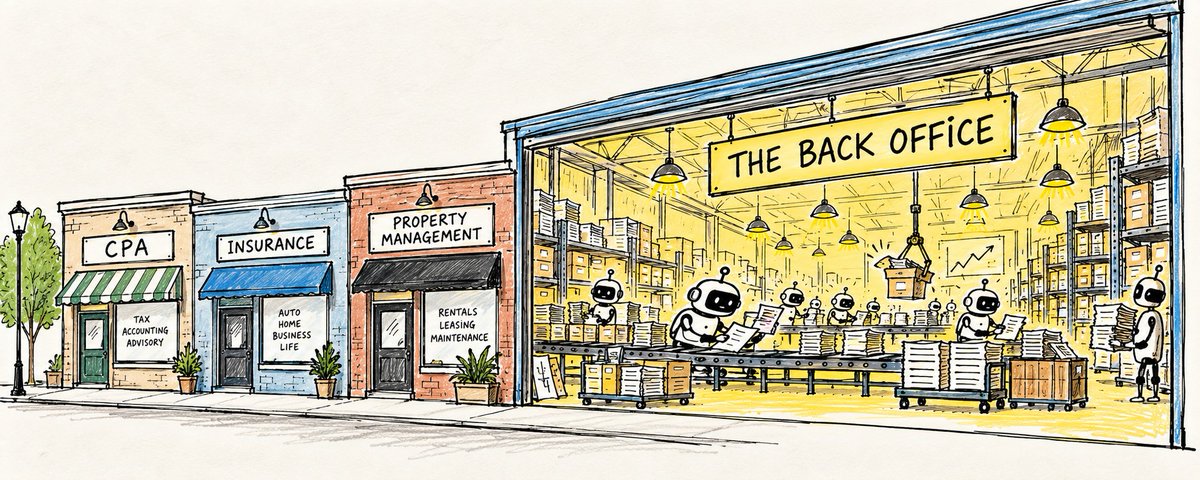
We started Affiniti to give traditional businesses a better credit card. As we grew, our customers showed us they needed more. They were drowning in back-office work, with no one building the tools to set them free.
So, we’re becoming their AI native operating system to help them compete in the modern era.
Affiniti’s agents work inside the workflows these businesses already run on. They bring scattered data together, take on the manual work, and surface the insights that drive better decisions. Every hour we give back is an hour owners can spend on their people, their customers, and their communities.
For us, finance is just the beginning.
They powered the first 250 years of America. Affiniti is how they’ll power the next 250. Here’s to America’s Operating System.
Thank you to the Osmos team and Affiniti marketing team for helping turn our vision into reality.
Watch the film and see where we’re headed → affiniti.com


Aaron Bai retweeted

None of you are actually willing to undergo Siddartha's journey.
The reason 0th world marginal impact products like this keep being created is because most in SF are so far removed from what ails the average person
They don't know regular people & won't leave the SV bubble to interact with them in an earnest everyday manner.
What do I mean by earnest? Not as a potential "user", but as a human being: a friend, colleague, a lover.
Don't be another person in SV blatantly unaware of the average person's suffering.
Understand how to reduce suffering, and you can change lives.
Pain is intevitable, suffering is optional.

Instinct CEO Noah Shinn says agents will let restaurants give tables to birthdays and anniversaries over whoever clicks first
"And traditionally, because of the way that the internet has worked, at least for reservations, it's been first come first serve. So anyone that comes in, no matter how important or how not important it might be, whoever gets in first gets the reservation."
"But what if you had the ability for the agent to be able to communicate on both sides, communicate, hey, this is important. This is actually the person's spouse's birthday, the 30th birthday, a very special event is coming up."
"And the restaurant too can say, let's actually prioritize birthdays or major decade birthdays or major anniversaries or these certain people, I don't know, whatever it might be, right?"
"So now with the ability, with all of the logistical burden of having to describe exactly what your case is and what's happening and why it's important. Now we have the ability to perfectly match what does the restaurant want? What does the user want?"
"And that will result in more special events for the users being able to actually have a spot in the restaurant."


Aaron Bai retweeted
Phenomenal execution by the Affiniti team in the last 6 months @aaronbaii & @sahilkphadnis.
I think I’ve only ever seen two instances of founders this young growing a company so quickly at scale.
Feel like I owe @ArfurRock some carry.


Aaron Bai retweeted

Half of the small, small SMBs in the U.S. are held together by massive key man risk, don't have a working toilet, have been dumping chemicals in the back of the site, and have piles of unorganized paperwork.
But yeah, sure, just stick AI in there and it's all gravy.
Aaron Bai retweeted

Tell me you never bought a business without telling me you never bought a business
The arrogance in thinking that not only will you be better than 20+ year owners at the main job, but that you will also have time to integrate AI and then do tuck-in M&A...

There is incredible alpha today in buying small businesses at 5-6x multiples, using AI to streamline operations and build backend tools that can handle scale, and then layering on a bunch of small tuck-in M&A deals at 3-4x multiples.
Once the company hits scale with proper integration, the goal should be to flip the business to a more sophisticated PE buyer or strategic at 7-8x multiples
The only issue? This opportunity won't lie around forever. Fully expecting a massive rise in micro PE shops over the next 5 years that follow this exact playbook to amass massive fortunes for the founders and LPs
There has never been a better time to start
Aaron Bai retweeted

We almost sold our roofing company about a year ago.
We had a few cohorts of buyers.
1/ The out-of-towner who didn't actually want anything to do with the business. [PASSED]
2/ The undercapitalized who wanted to lever up the company 90% and make me roll equity, knowing they were going to go bankrupt almost immediately. [PASSED]
3/ The MBA who watched too much Codie Sanchez and thought they could run a framing or HVAC company with literally zero experience in the trade. [PASSED]
Long story short, we kept the company and are just building.

Aaron Bai retweeted

I have bought 11 SMBs and this terrifies me. People are going to risk EVERYTHING on this thesis and they are going to learn a BRUTAL lesson. The firestorm you encounter post-close is like nothing else!
Agree with @MatznerJon. There are obviously killers like Jon who can buy one of these businesses and figure it out. And sure, some industries are easier than others.
But I love the idea that MILLIONS of independent owners spent 30 years building profitable businesses and the missing ingredient was a GSB grad with an SBA loan and a Claude subscription.
Most of backbone America runs on insane complexity. People, equipment, customers, working capital, tribal knowledge, and 900 things that break.
I started my business to bet on them.
They already have the judgment, scar tissue, community trust, and, often, genuine love for the service they provide.
Turns out that’s harder to replicate than just their CRM.
Give those people superpowers. Don’t cosplay as them.

Here’s why Greg is wrong, from someone who bought, grew, and sold one of these:
Nobody running of these is dumb, and the fact that they've survived is testament to the fact that they're smart.
To me, baked into this strategy is a sense of paternalism. Look at these dumb boomers. I can come in with absolutely zero industry experience and a Claude Code subscription and change this industry!!
The most pervasive dynamic within Main Street businesses is resource scarcity.
Not enough time or money to do any of the million things that you plan to.
Awesome, so you want to do some big Claude Code thing?
Cool, you're going to need to find time to do that between figuring out how to repair the trucks, fix your broken Google My Business listing, and not take a salary that month because of the reinvestment you're making with the hope that it will pay off.
Getting a CRM implemented correctly is hard enough!!
You need managers who enforce the process, employees who change their habits, and someone accountable when things break.
Now try rebuilding delivery around AI WHILE KEEPING THE BUSINESS ALIVE AND SERVICING DEBT.
You come in full of piss and vinegar and on day four your operations manager quits because she liked doing things the old way, and suddenly you’re covering her job instead of building agents.
Greg acknowledges key-person risk, but it deserves far more weight in his economics.
The people, process, and change management required to make even basic technology productive can consume years.
Innovation has to improve the performance of the whole business.
Justin Roff-Marsh and I have discussed the sequence: identify the constraint, get more productive use from its existing capacity, then add capacity where necessary to increase throughput.
Said another way ---If an accounting firm’s bottleneck is senior review, generating drafts ten times faster may just create a bigger queue.
You have to show how AI frees the reviewer, change the workflow so that capacity gets used, and then upgrade whatever limits further growth.
Technological innovation must drive global maxima, not local maxima.
Even real savings elsewhere need to be converted into lower expenses (which is only weak replacement) or redeployed against the constraint.
A list of automated tasks tells me very little about how much more profitable work the firm can complete.
Now put a large, expensive acquisition loan underneath that transition.
In the SBA buying range, debt payments compete with the money you need for implementation, training, replacement hires, and additional capacity.
Saving people time doesn’t automatically remove their salaries.
Your plan is to do what? Have Betty train you in the first three weeks to replace her, and then you're gonna fire her. Let me know how that goes for you with a big ass loan due every month.
More than likely you're going to end up keeping Betty and adding a bunch of AI expenses, which are going to reduce all of your fancy pre-acquisition projections.
You can spend months paying for the existing payroll, new software, and human review before realizing any savings.... If at all.
And cutting a support role can make your scarce, expensive specialists less productive if they inherit its work.
Ultimately a playbook like the below is achievable but requires an enormous amount of experience, judgment, skill, etc.
And the idea that a corporate refugee is going to parachute in out of their W2 with a couple agents and transform a business model fundamentally feels like something that someone who's never tried to do it before in a real business would say.
I'm happy to have this debate with anybody who'd like to have it. I've both owned these businesses and built agents in an enormous number of these categories referenced.
Aaron Bai retweeted

Here’s why Greg is wrong, from someone who bought, grew, and sold one of these:
Nobody running of these is dumb, and the fact that they've survived is testament to the fact that they're smart.
To me, baked into this strategy is a sense of paternalism. Look at these dumb boomers. I can come in with absolutely zero industry experience and a Claude Code subscription and change this industry!!
The most pervasive dynamic within Main Street businesses is resource scarcity.
Not enough time or money to do any of the million things that you plan to.
Awesome, so you want to do some big Claude Code thing?
Cool, you're going to need to find time to do that between figuring out how to repair the trucks, fix your broken Google My Business listing, and not take a salary that month because of the reinvestment you're making with the hope that it will pay off.
Getting a CRM implemented correctly is hard enough!!
You need managers who enforce the process, employees who change their habits, and someone accountable when things break.
Now try rebuilding delivery around AI WHILE KEEPING THE BUSINESS ALIVE AND SERVICING DEBT.
You come in full of piss and vinegar and on day four your operations manager quits because she liked doing things the old way, and suddenly you’re covering her job instead of building agents.
Greg acknowledges key-person risk, but it deserves far more weight in his economics.
The people, process, and change management required to make even basic technology productive can consume years.
Innovation has to improve the performance of the whole business.
Justin Roff-Marsh and I have discussed the sequence: identify the constraint, get more productive use from its existing capacity, then add capacity where necessary to increase throughput.
Said another way ---If an accounting firm’s bottleneck is senior review, generating drafts ten times faster may just create a bigger queue.
You have to show how AI frees the reviewer, change the workflow so that capacity gets used, and then upgrade whatever limits further growth.
Technological innovation must drive global maxima, not local maxima.
Even real savings elsewhere need to be converted into lower expenses (which is only weak replacement) or redeployed against the constraint.
A list of automated tasks tells me very little about how much more profitable work the firm can complete.
Now put a large, expensive acquisition loan underneath that transition.
In the SBA buying range, debt payments compete with the money you need for implementation, training, replacement hires, and additional capacity.
Saving people time doesn’t automatically remove their salaries.
Your plan is to do what? Have Betty train you in the first three weeks to replace her, and then you're gonna fire her. Let me know how that goes for you with a big ass loan due every month.
More than likely you're going to end up keeping Betty and adding a bunch of AI expenses, which are going to reduce all of your fancy pre-acquisition projections.
You can spend months paying for the existing payroll, new software, and human review before realizing any savings.... If at all.
And cutting a support role can make your scarce, expensive specialists less productive if they inherit its work.
Ultimately a playbook like the below is achievable but requires an enormous amount of experience, judgment, skill, etc.
And the idea that a corporate refugee is going to parachute in out of their W2 with a couple agents and transform a business model fundamentally feels like something that someone who's never tried to do it before in a real business would say.
I'm happy to have this debate with anybody who'd like to have it. I've both owned these businesses and built agents in an enormous number of these categories referenced.

Aaron Bai retweeted

We started @column with the insane idea to rebuild every component of the financial system from scratch. Today, I think we've finally completed that build.
We're releasing four new products, so any technology company can build at the frontier of financial services.
Aaron Bai retweeted

I used Ramp for the first time this week. Everything on here is performative, their interaction work and design language is so busted. I’m floored.
Aaron Bai retweeted

What happened to Bill dot com? Using it for the first time in five years and its one of the most broken software experiences I've ever had.
Aaron Bai retweeted

BREAKING: Nvidia stock, $NVDA, falls -4% after reporting a record $96.2 billion in quarterly revenue.
The company beat both revenue and EPS expectations and provided stronger than expected guidance.

Aaron Bai retweeted

Ask for other VCs:
Please don’t aggressively reach out to a startup’s customers (esp when they aren’t fundraising) to do diligence
There are many ways to do this that are much less disruptive to customer relationships 🙏 (at the very least, ask the founder first!)
Aaron Bai retweeted

Today, @naturalpay is 365 days old.
Last summer, I wrote a 15-page memo on agentic payments and the future of financial services. I had spent months going on long walks around Santa Monica, trying to figure out what I wanted to work on next. I was actually trying pretty hard to get away from payments.
But the more I explored agentic payments, the more inevitable it felt. Like something I just had to go build. So on a Sunday morning in August, during one of many walks down Montana Ave, I texted the memo around to a few people to get a pulse check on the idea. 72 hours later, we had raised $10 million dollars.
No pitch deck. No product. Just a vision.
In the year since, we’ve raised over $40 million, grown to 18 people, and launched our first six products. By the end of 2026, we’ll have doubled the team, the number of products, and have a few other things out in the world that we can’t talk about yet.
It’s been the fastest, craziest, most expansive year of my life. I’m incredibly thankful for everyone who decided to take this bet with us. I couldn’t have done it without the support of our exceptional team, world-class investors, and incredible partners.
To celebrate one year, it felt right to go back to where this all started: long-form thoughts about the future.
So consider this the follow-up. Agentic payments, revisited.
natural.com/blog/agentic-pay…