





F1net.gr retweeted

Il miglior pilota e la seconda miglior macchina della griglia continuano a puntare sui dischi Brembo e lavorare su soluzioni innovative. E pensare che gli esperti ci avevano assicurato che i Brembo fossero IL problema e i CI la soluzione a tutti i mali
formula1.com/en/latest/artic…

F1net.gr retweeted
Charles conferma, ancora una volta, che il 2026 era partito bene per lui, ma che a un certo punto è cambiato qualcosa che lo ha messo scomodo con la SF26 e ha dovuto lavorare per ritrovare il feeling. È chiaro a cosa alluda. Speriamo che la Ferrari non ripeta l’errore nel 2027


F1net.gr retweeted

I have been vocal about this before—biometrics innovations are incredible and WHOOP is at front runner in this domain
Biometric data should not be broadcast live. Just because we CAN show it, does not mean we should.
#F1

A new way to experience Formula 1.
Formula 1 and @WHOOP have announced a new multi-year partnership aimed to bring fans closer to the physical and mental demands of racing than ever before.
As the Official Health & Fitness Wearable Partner of Formula 1, WHOOP will work with F1 to develop new storytelling opportunities around driver biometric insights, helping fans better understand what drivers experience during some of the most intense moments on track.
From strain and focus to the demands of racing at more than 300km/h, the partnership aims to provide a new perspective on the athletes behind the wheel and another way for fans to experience the sport.
Read the full announcement here: corp.formula1.com/formula-1-…
F1net.gr retweeted

So embarrassing. You look at the depths of hell McLaren went to and they managed to find their way back in the span of 10 years while Ferrari has floundered year on year


F1net.gr retweeted

🔴La Ferrari aveva già preparato e approvato il comunicato per annunciare l'ingaggio di Adrian Newey nel 2014
Gli offrivano di vivere a Monaco, di spostarsi in elicottero a Maranello, piena libertà tecnica e di progettare un'auto stradale
La Ferrari gli consentí anche di poter progettare un auto stradale. Horner lavorò duramente per farlo restare, spingendo la RedBull a consentire a Newey un progetto per un auto stradale. Di conseguenza le cose andarono diversamente
@Planet_F1
F1net.gr retweeted

Two conflicting issues here. motorsportmagazine.com/artic…

F1net.gr retweeted
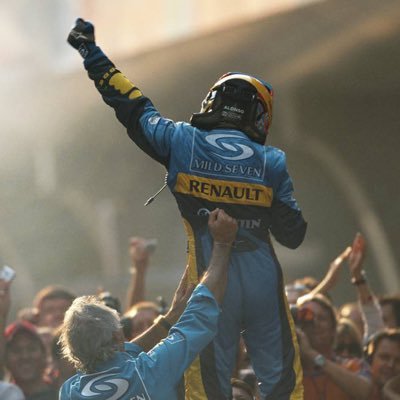
La Fórmula 1 sigue cometiendo el mismo error para la nueva reglamentación de motores en 2030.
El problema no son los motores térmicos V6, es la electrificación masiva y… EL TURBO.
El turbo es un gran silenciador de los gases de escape.
Que mantengan una microhibridación me parece bien, pero deben quitar el turbo.
De hecho, yo hubiese mantenido los V6, les habría subido la cilindrada a 2000 cc y habría eliminado este elemento.
F1net.gr retweeted

People are going to be DEVASTATED when they hear what those turbocharged V8's sound like...

🚨 OFICIAL | PRINCIPIO DE ACUERDO para la VUELTA DE LOS MOTORES V8
🤝 FIA, FOM y fabricantes han acordado las bases del nuevo reglamento:
🏎 Motores V8 turbo de 2,1 litros
⛽ Combustibles sostenibles avanzados
⚡ Hibridación reducida, alrededor del 10%
🔥 Coches más ligeros y ágiles
📅 Se presentará una propuesta definitiva a la FIA el próximo mes

F1net.gr retweeted

So not much of a stretch: keep same bore & stroke and V-angle… revolutionary!

The FIA, FOM and F1’s power unit suppliers have reached an agreement on the proposals to bring V8 engines back in 2030! 🥳
• New 2.1L turbocharged V8s
• Would run on advanced sustainable fuels
• Have limited hybridisation
• A lighter and more nimble chassis to place higher importance on driver skill
A final regulatory framework for 2030 will be presented to the FIA World Motor Sport Council next month.

F1net.gr retweeted

Lewis Hamilton explique avoir dû adapter son style de pilotage depuis l’introduction des pneus de 18 pouces en 2022. 🧐
Le Britannique revient sur les difficultés rencontrées pour s’adapter à ces nouveaux pneumatiques.
« Vous nous voyez prendre la piste et tout semble bien se passer, mais les pneus fonctionnent dans une plage de températures très restreinte. Dès que l'on dépasse cette fenêtre, ils surchauffent. C'est un aspect sur lequel je travaille actuellement.
C'est quelque chose avec lequel j'ai eu beaucoup de difficultés, je dirais surtout ces dernières années, et particulièrement depuis notre passage aux pneus de 18 pouces. J'ai dû apprendre à piloter différemment. Cela demande des compétences différentes, ou plutôt une approche différente du pilotage et de la prise des virages, ainsi qu'une gestion différente de l'équilibre de la voiture !
Je me souviens qu'autrefois, nous roulions très lentement, puis nous commencions à attaquer et les pneus étaient prêts. Je pense qu'à l'époque des jantes de 13 pouces, les pneumatiques étaient plus souples et plus agréables. Ils absorbaient mieux les irrégularités de la piste et j'aimais leur comportement. On parvenait beaucoup mieux à ressentir ce qu'ils faisaient.
Ceux d'aujourd'hui sont au contraire très rigides, presque comme un mur de pierre. Le flanc est tellement bas qu'il n'y a quasiment aucun mouvement. Mais lorsqu'on parvient à les faire fonctionner correctement, ils offrent d'excellentes performances.
Au Mexique, j'ai réussi à tirer le maximum des pneus tout en maintenant leurs performances pendant l'intégralité du tour.
On se retrouve souvent dans une situation où, par exemple, les pneus avant ne sont pas encore à température dans le premier virage, alors que les pneus arrière le sont déjà. Puis, lorsque les pneus avant atteignent leur température idéale, les pneus arrière commencent à se dégrader.
C'est un équilibre extrêmement précaire à trouver. Parfois, à la sortie du dernier virage, juste avant de commencer le tour lancé, les pneus arrière ne sont pas encore prêts, mais ils s'améliorent vers la fin du tour. D'autres fois, au contraire, ils sont déjà trop chauds.
Trouver cet équilibre, croyez-moi, c'est comme chercher une aiguille dans une botte de foin.
Honnêtement, cela a été vraiment, vraiment, vraiment compliqué à trouver. Mais quand on veut, on peut. Il faut simplement continuer à travailler et à faire des efforts. »
Via @FormulaPassion
#F1

F1net.gr retweeted
It's actually impressive how the LH44 fanbase will sell their souls to the lowest bidder just to keep their narrative alive.
They've now reached the point of defending Jonathan McEvoy, completely ignoring everything he's written about their beloved messiah.


🚨 BREAKING: The FIA has BANNED British Daily Mail journalist Jonathan McEvoy from the F1 paddock for the remainder of the 2026 season.
This comes after he called Charles Leclerc a "sneaky little bastard."
McEvoy then had a meltdown, launching a personal attack on Ferrari TP Fred Vasseur and accusing him of snitching to the FIA:
"A tubby little nobody called Fred Vasseur..."
"He's a chuckling buffoon well out of his depth."
Was the FIA's punishment too harsh or too lenient? What are your thoughts on this?

F1net.gr retweeted

So proud to introduce you all to the GR63 Academy. I want to give something back to my sport by finding those hidden stars and giving them the support and guidance they need to reach their potential. Following the first two rounds at Silverstone, I’ll identify 25 kids to take part in the GR63 Academy in 2027. Thank you to Silverstone and the BRDC for helping make this happen!


F1net.gr retweeted
Ferrari aveva individuato in Cedric Michel-Grosjean (ex McLaren) il sostituto di Adami. Santi doveva essere una soluzione ad interim, ma, vista la buona intesa con lui, Hamilton ha deciso di tenerlo. Non diamo a Vasseur responsabilità non sue fanpage.it/sport/motori/hami…

F1net.gr retweeted

Yeah once it's a British driver that suffers it's not a funny meme anymore that no one takes serious but a valid concern. Miss me with that shit it's been a problem for years now.

🚨 | Concerns are emerging that Ferrari's race engineers have "almost robotic" team radio communications with their drivers.
There is a sense that other top teams have more effective communication.
[@Auto_Racer_it]
F1net.gr retweeted
🚨Il motore Ferrari é il quarto in griglia. Ferrari era tra il 6-8% di ritardo inizialmente, ma nonostante i due Aduo la Scuderia é rimasta oltre il 4%. Ferrari non ha puntato fortissimo sui due Aduo, ma ha scelto di tenersi lo sviluppo grosso per il 2027, che rappresenterà la vera rivoluzione. Non é rientrata nel 4% anche perché Mercedes e RedBull hanno sviluppato, Mercedes ha recuperato dei cavalli risolvendo problemi di affidabilità annullando almeno uno dei due Aduo Ferrari, lo stesso per RedBull che con la comprensione del suo motore é riuscita a stabilizzare la sua potenza riducendo anche in questo caso ciò che la Ferrari aveva ottenuto con i due aggiornamenti
@Auto_Racer_it Live ✅
F1net.gr retweeted
This is what Charles Leclerc has been dealing with at Ferrari for the past nine years.
Not only has he never had a championship winning car, but the Ferrari pitwall is his biggest opponent.
And yet, he remains loyal and stays with them through the trenches.


F1net.gr retweeted

🔴 Ferrari : des détails concernant le changement de moteur sur la SF-26 de Lewis Hamilton.
- Le moteur thermique n'était pas en panne et le problème ne découlait pas strictement du premier moteur à combustion interne (ICE) neuf introduit ce week-end au Brésil. La panne concernait certaines températures liées au système hybride : un problème que Ferrari n'avait pas rencontré de manière aussi directe au cours de cette saison.
- Le remplacement des seuls éléments nécessaires aurait de toute façon entraîné une lourde pénalité. À ce stade, accumuler 20 ou 65 places ne changeait rien au résultat pratique : Hamilton serait parti en fond de grille. D’où la décision d’étendre l’intervention à l’ensemble du groupe motopropulseur. Le remplacement complet ne signifie donc pas que tous les éléments étaient endommagés. Ferrari a profité de cette pénalité pour installer des composants neufs et réduire les incertitudes après une panne inédite, sans se limiter à remplacer le strict nécessaire pour revenir en piste.
- Ce raisonnement concernait surtout les prochaines épreuves. C’est avec cet équipement que l’équipe devrait aborder la fin du championnat : conserver des éléments potentiellement exposés aux conséquences du problème aurait signifié accepter le risque d’une nouvelle panne et de pénalités supplémentaires lors des prochaines courses. Le choix a donc été fait de concentrer à Interlagos le coût sportif de l’opération, en tirant parti d’une position de départ déjà compromise pour effectuer le remplacement en vue de la fin de saison.
(🌕 Plus d'informations dans l'article de @GiulyDuchessa : autoracer.it/ferrari-spiegaz…)

F1net.gr retweeted

A locked Mercedes EQS battery won't even let you repair it. One cell dies, the slave BMS latches the whole pack, throws P1C80 and kills the high voltage — and here's the trap: you can't just clear it, the fault is burned into the BMS memory and no diagnostic tool on this planet can wipe it. Dealer answer? New battery. Thirty grand. For one dead cell. That's exactly where we come in.
We cracked it the only way that actually works — read both slave BMS EEPROMs byte by byte, decode the stored faults, map the internal resistance of all 108 cells, and watch the failure replay itself: cell 12 in module I collapsing from 3.8V down to 1.5V under load while the BMS counted down to lockout. No scanner shows you that. We pull it straight out of the chip — and we even caught the next cells starting to go before they strand the car again.
And here's the clever bit nobody talks about — this pack is really two batteries in one. Two 400V strings running in parallel, each on its own BMS. When the right string went bad, the system did exactly what it was built to do: it cut the faulty right side off from its own control and kept the car running on the left string alone. The car literally drove on half its battery, limping along on the healthy left side while the dead right one sat isolated — until the left slowly drained itself down to empty. That's redundancy doing its job, and most people never even know it happened.
And get this straight — the lockout is wiped while EVERY byte of the original factory calibration stays untouched. No donor BMS. No swapped-in module dragging someone else's data into your pack. Nothing compromised. The battery keeps its own brain, its own calibration, its own identity — just without the fault. That's the difference between a real fix and a bodge.
Full breakdown, pictures and part numbers at the bottom of the article:
EQS V297 · slave BMS M95M02 + TC277T - Cells CATL
TOP A789 900 2801 · BOTTOM A789 900 9800
Faults cleared: P1C80 · P1540 · P0F18 · P0F64 · P0B63 · P0B64 · P0B67 · U357D
Software side is done — the lockout is beaten, calibration intact. Now we are waiting brand new modules from Poland to install into battery and finally run the car without any locking faults and with more range.
Sustainablity of EV in comparison with ICE is measured in repairability!
Full article: evclinic.eu/2026/11/10/the-m…

