
Co-Founder & CEO Cognita | Stanford AI PhD
San Francisco, CA
Joined January 2024
- Tweets63
- Following238
- Followers272
- Likes58


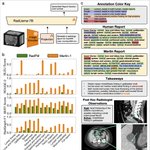

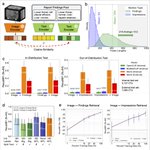
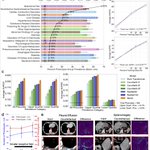
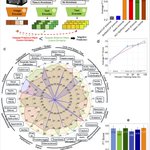

1. We’re probably the only company seriously doing all of it. We’ve worked on reporting/dictation since founding @cognitaimaging, we’re fixing hanging protocols, and we’re rebuilding the full PACS. teapawt.org/loublanks/status/21220…
2. Seems you’re not up to date on @cognitaimaging's recent progress. What you call “garbage interpretation software” can save lives (e.g. 50% enhanced detection of pancreatic lesions) and appears to do more to help rads care for more patients than any other technology, dictation included. It only takes ONE save to make it worth it. Data here: teapawt.org/loublanks/status/21205…
3. Radiologists aren’t keeping up with imaging demand. Imaging volume is compounds at 4%, 2x the economy. The radiologist workforce grows at <1%, half the economy’s rate and nowhere near imaging’s.
4. We’re one of the few radiology AI companies that strongly believes AI + radiologist is the best future for patients, and we bet the company on it. I talk extensively in public about the specific reasons, and about why radiology’s best future is a highly optimized AI + human intelligent system. Other AI companies are moving toward replacement, even while publicly claiming to support radiologists.
5. So, if @cognitaimaging doesn’t succeed in empowering radiologists with this “garbage interpretation software,” or that success isn’t sustainable as a business, replacement is a possible outcome. The rationale will be that subpar care from AI alone beats no care from a collapsing system.
6. We’ve assembled the best AI and clinical teams in the world to tackle this and make sure radiology doesn’t go away as a field. Radiologists’ support in this fight is critical.
CAUTION: Investigational device. Not for sale in the United States.

If AI companies wanted to actually help radiologists, they would use AI to fix the horrible dictation options we have and solve hanging protocols. Instead they just pump out more slop fracture detection and garbage interpretation software no one wants. @pranavrajpurkar @joejanizek @loublanks
2
12
2,041
In late 2024, when @zhjohnchan, @Dr_ASChaudhari, and I started @cognitaimaging, it was clear that radiology needed a new ambient reporting system to replace Nuance PowerScribe and Fluency.
Our reasoning:
1. Vision-language model (VLM) pixel-to-report drafting would soon cover most studies (we were right). Then reporting IS the UI for VLMs: new workflows for efficient draft review and editing should be designed in from day one. Otherwise, VLM benefits evaporate.
2. Partnering with an existing reporting provider wouldn't cut it. One team should build both the VLMs and reporting.
3. Before VLMs cover every study everywhere, radiology needs better reporting today. Our first mission is to address the radiologist shortage. Radiologists spent too much time correcting reports vs. looking at the patient. AI could feel like a transcriptionist beside you, accurately recording and formatting findings.
As we often do, we thought: how hard can it be?
We did not know what we did not know.
Radiology speech-to-text is brutally hard: (1) radiologists speak extremely fast. No one is listening and faster = more patients; (2) they speak quietly, especially in shared rooms; (3) the terminology is complex. The audience is another physician, not a patient.
Designing a workflow that feels like a reliable assistant is just as hard. In competitive reporting offerings, raw dictation collects in one box while you read; LLM processing runs only after the read, taking time to generate the report in a second box. Late additions trigger full report reprocessing that can change it unexpectedly, and review can't happen during dictation. You wait for processing at the end to review and sign the report.
Combining VLMs and reporting is its own challenge. I'm a slow reader. Reviewing a long CT abdomen/pelvis draft top to bottom might save me nothing vs. dictating from scratch.
Over ~2 years, our teams have tackled all three:
Speech-to-text: Nothing off the shelf is good enough. Our advantages are an audio data flywheel of 4,000+ Radiology Partners radiologists dictating every day, an exceptional AI team, the most experienced clinical team in AI validation and deployment.
Workflow: Assuming anything was technically possible, we spent enormous time with radiologists to dream up the perfect workflow, and realized it had to be real-time. As you dictate, the report continuously takes shape via targeted edits to the relevant text. Significant technical challenge. But our data flywheel lets us build faster, more accurate models than third-party LLMs, every edit becomes signal to improve them, and, critically, the same AI and clinical teams work side by side every day.
Reporting as the UI for VLMs: More to come soon. A focus since day one. I think people will love what we've built.
Proud of the @cognitaimaging, Mosaic Clinical Technologies, and @Rad_Partners teams for moving at light speed.
Today, @cognitaimaging and Mosaic Clinical Technologies are releasing results from our nationwide research program demonstrating, for the first time, that AI can have a massive impact on both the quality and the capacity of radiology.
Nearly 8 million X-ray and CT exams drafted.
In preliminary data, about 40% enhanced detection across 50 significant conditions evaluated, including 50% for pancreatic masses and 73% for fractures on head CT.
Clinically significant error rates comparable to or lower than radiologist reports.
More than 27% efficiency gains on CT and 31% on X-ray.
Nearly a decade ago, increasing the world's access to healthcare felt like the most exciting mission, and AI, while early, seemed promising. Radiology was the right place to start: arguably our most important diagnostic tool, serving every other specialty, fully digital, and facing a shortage.
But AI that could emulate radiologists was nowhere near ready, so my co-founders @zhjohnchan, @Dr_ASChaudhari and I worked on it at the @StanfordAIMI, building models that read the full study and write the report.
Around then, Geoffrey Hinton said we should stop training radiologists, and I naively agreed. I thought I'd build an AI radiologist during my PhD and solve diagnostic access.
6 years later, the biggest lesson was that we were both wrong. AI and human intelligence are fundamentally different, with non-overlapping strengths. AI alone shortchanges patients, so our goal became empowering radiologists.
Meanwhile, industry built classifiers: over 1,200 FDA-authorized radiology AI devices, almost all giving a yes/no answer for a single finding, with close to zero impact on capacity.
In response, we started Cognita, partnering with @Rad_Partners from day 1. A year later, our conviction in AI plus radiologists, along with many synergies, led us to join RP to build that combined system.
Today's results culminate this journey and our close partnership with @RadKottler's clinical AI team and the Mosaic Clinical Technologies and Radiology Partners teams, who made the seemingly impossible happen.
My message to RP colleagues, radiologists and support teammates:
1. Increasing each radiologist's capacity with AI is the only lever for the current shortage emergency.
2. My friends at competing AI companies need to keep raising money and justify valuations, so they push a replacement narrative behind closed doors.
3. The best care needs radiologists in the loop. We bet our company on it.
4. If we don't succeed, a company trying to replace radiologists will, and care will suffer.
5. We need every person at RP to lean in. With all vectors aligned, we will be unstoppable, building the best future for radiologists and patients.
Over half the world lacks access to basic healthcare. We will not stop until that changes.
Papers: cognita.ai/research
CAUTION: Investigational device. Not for sale in the United States.

Starting with radiology, we will significantly increase the world’s access to healthcare. Radiology is right now undergoing the biggest transformation in its history, and the Cognita and Mosaic Clinical Technologies teams are leading it.
If you want to be part of this mission, every advantage is here:
1. Large-scale, high-quality data from U.S. board-certified radiologists: archival, real-time, and radiologist edits creating a powerful data flywheel
2. World’s largest radiologist workforce, across multiple countries, to build the combined human and AI clinical insight generating machine
3. Serious AI compute
4. Full end-to-end PACS, including an industry defining reporting system
5. Elite, lean clinical and AI teams, building together every day
6. One AI team co-designing the ambient reporting interface and underlying vision-language models
7. National-scale research studies
Thank you to @SoHaZadeh, @ZadehSuzanne, and the rest of the @Farrventures team for hosting such an inspiring event and providing the opportunity to share what we've learned.

"The future of intelligence will be one highly optimized combined human and AI system."
Radiology's Shortage Crisis and the Human-AI Solution. That was @loublanks's talk at FARR. What the co-founder and CEO of Cognita has learned:
1. Imaging volumes grow 4% a year, but the number of radiologists has been flat for almost a decade.
2. With AI, humans are now finding 50% more pancreatic lesions.
3. He once thought AI would replace radiologists. Now he says human intelligence and AI are fundamentally different, and the future is the two combined.
FARRsummit.com
#FARR #FARRSummit #sftechweek
Most people don't realize that radiology AI is at a major inflection point right now, and that it's one of the first real-world use cases of scaled clinical AI
Looking forward to sharing a stage with AI titans at the @Farrventures Summit
We’re honored to welcome @loublanks to the FARR summit stage.
Louis Blankemeier is co-founder and CEO of Cognita, which is building supervised self-driving for radiology. During his AI PhD at Stanford, he led development of the first radiology foundation model published in Nature and researched radiology AI at Microsoft and Google.
He founded Cognita on a bet that the full stack wins in real-world clinical AI: data at scale, models, workflow, and physician feedback. In 2025, Cognita was acquired by Radiology Partners, the NEA-incubated company that is the world's largest medical specialty group. Together, they now own all four. Cognita's AI models have cut read times by up to 76% and lifted detection rates by up to 52% across a range of critical diseases, generating significant patient impact at scale.
🗓️ October 5, San Francisco. The countdown is on.
Limited seats. RSVP now.
🔗 luma.com/FARRsummit
#FARRSummit #AI #HealthcareAI #ClinicalAI #Radiology #Cognita #SFTechWeek #SFTW

5
573
Excited to share that Cognita has been named "Image Processing Solution of the Year" in the 2026 AI Breakthrough Awards.📷
As imaging demand continues to rise worldwide, we're building AI that helps radiologists serve more patients while maintaining the highest standards of care.
View the full list of winners here: aibreakthroughawards.com/202…
1
11
799
Louis Blankemeier retweeted

For years, the narrative was that #AI would replace radiologists.
Reality: demand is rising as imaging volumes grow.
@loublanks offers a more practical view: “supervised self-driving of radiology”—AI supports the workflow, radiologists bring the expertise.
Read it in @PuckNews: puck.news/how-might-ai-repla…

Thanks for the discussion @GrinsteinJ
#AIForGood

Point Break: Radiology AI Nails 3D Diagnostic Tasks Across Healthcare Sites
#Cognita's chest #Xray reporting tool received FDA Breakthrough designation as its founders published a model for abdominal CT interpretation & reporting
@loublanks
#radiology #AI
hubs.li/Q045MTWR0

345
How can AI support radiologists as imaging demand continues to rise? I spoke with @KatieMPalmer from @statnews about how foundation models can help expand capacity and access to care, improve accuracy, and fit naturally into the way radiologists already work.
Proud of the work our teams at Cognita, Mosaic Clinical Technologies, and @Rad_Partners are doing to show how human-AI collaboration can strengthen radiology and improve patient care.

Cognita Imaging CEO Louis Blankemeier on the promise of foundation models in radiology. trib.al/qGUv6nA

Today, @zhjohnchan, @Dr_ASChaudhari and I introduce Cognita.
Over half the world lacks access to sufficient healthcare. We started Cognita a year ago to address this.
Radiology is (1) the first-line diagnostic specialty, (2) facing a worsening workforce shortage, and (3) highly digitized, enabling AI to have an enormous impact. Stage 1 of our company is focused on increasing the world’s access to radiology.
To do this, we are building models that emulate radiologists - describing in detail hundreds of potential imaging findings and comparing to prior studies. This is a departure from existing narrow radiology AI solutions that only provide a yes/no answer for a specific finding.
Our goal is to build copilots that help radiologists perform more accurately, efficiently, and with higher satisfaction, leading to reduced missed diagnoses and shortened patient wait times.
We partnered with @Rad_Partners from day 1 to make this vision a reality. This collaboration has given us access to the required scale of data, and a hand-in-hand partnership with radiologists who have more experience validating and deploying radiology models than any other team on the planet.
What our teams have accomplished together over the past year is extraordinary, seeing unprecedented performance across X-ray and CT.
Stage 2 will focus on adding diagnostic capabilities that extend beyond current radiology practice, such as risk prediction and quantification across time. Stage 3 will incorporate additional data types - clinical notes, medical records, labs, omics, pathology - to deliver improved diagnostics and personalized treatment recommendations.
Because our partnership has been so compelling over the past year, we decided to fully join forces with Mosaic Clinical Technologies, @Rad_Partners' technology division, through an acquisition. This creates further alignment, and is carefully structured to increase Cognita’s velocity. We strongly believe this is the right path forward to increase the world’s access to healthcare.
We are just getting started and the future of healthcare AI is incredibly exciting. If you’re motivated to engineer solutions to one of the most challenging technical problems and impact patient lives every day, there is no better place to be. Please consider applying at jobs.ashbyhq.com/cognita-ima….
Louis Blankemeier retweeted

🧵 What if AI could learn from millions of unlabeled radiology images and reports—and then flexibly adapt to new clinical tasks? In a new comprehensive review in @radiology_rsna, we dive into how foundation models (FMs) are set to revolutionize radiology! @AIMI_Stanford (1/6) 👇

RT @Zepeng_Huo: 🎉 Excited to share that our latest research, 𝘛𝘪𝘮𝘦-𝘵𝘰-𝘌𝘷𝘦𝘯𝘵 𝘗𝘳𝘦𝘵𝘳𝘢𝘪𝘯𝘪𝘯𝘨 𝘧𝘰𝘳 3𝘋 𝘔𝘦𝘥𝘪𝘤𝘢𝘭 𝘐𝘮𝘢𝘨𝘪𝘯𝘨, has been accepted at 𝗜𝗖𝗟𝗥 20…
Incredible work led by @zhjohnchan and @mayavarma23:
✅ Transparent, open-source benchmarks
✅ Suite of open-source models
✅ Open-source instruction tuned model trained on 35 tasks
✅ Open-source code for curating CheXinstruct dataset
Most notably, this research demonstrates how AI-generated radiology reports can significantly enhance radiologist efficiency.

Louis Blankemeier retweeted

The most powerful agent, interpreting X-rays is opensource🤗
Louis Blankemeier retweeted
So proud of the release of the GREEN metric. See what you can do when you merge medical AI research and open-sourceness.
26,000 downloads on 🤗 Hugging Face and counting.
🟥 EMNLP proceedings: aclanthology.org/2024.findin…
🤗 Dataset: huggingface.co/datasets/Stan…
🤗 Models: huggingface.co/collections/S…
🤗 Space: huggingface.co/spaces/Stanfo…
🐍 GitHub: github.com/Stanford-AIMI/GRE…
📄 Project Page: stanford-aimi.github.io/gree…
🧵 👇

We are excited to announce the launch of our company - Cognita! We are working towards building the future of radiology through multi-modal AI systems with a great group of founders @zhjohnchan, @Dr_ASChaudhari and I, and advisors Ajit Singh, Chris Re, and @curtlanglotz
1/2
We are assembling a lean team of engineers and researchers. If you're interested in making large-scale clinical impact on healthcare with AI, we would love to hear from you!
Let us know here: forms.gle/zSzurGf2e4H9wtAh7
3
519