






Michael retweeted

Ah yes, that famous ski territory of… the Nashville metropolitan area…

El Niño could bring a much better ski season to parts of the West, while prolonged warmth and less reliable snow may create tougher conditions for resorts across the Midwest and East. ⛷️ bit.ly/4yUXazN

Michael retweeted

2000 年,美国地底埋了无数根光纤,
所有人都说互联网会改变世界,
他们说对了。
但埋光纤的公司,成片倒闭。
WorldCom、Global Crossing 这些名字,年轻人已经没听说过了,
光纤留了下来,被别人用白菜价买走,成就了后来的互联网巨头。
2026 年,美国到处在盖数据中心,所有人都说 AI 会改变世界,我也相信。
但马斯克刚刚说:200 多家租算力的新云公司,将迎来小鱼般的死亡,债券市场已经不给没有大量收入的公司借钱了,而他自己,刚给 SpaceX 借到 400 亿刀买 GPU。
CoreWeave 距高点跌了六成多,IREN、Cipher 这些转型 AI 的矿企,跌了七成左右。
每一次技术革命,都会留下两样东西,改变世界的技术和一地倒在路上的铺路人。
你买的,是哪一个?
Michael retweeted

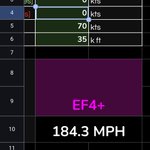
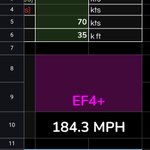
🧵 (1/16) Instead of defending and/or attacking anyone, I'd like to make this conversation as a kinda cool educational moment for all. There is 100% some scientific radar analysis here that both sides have yet to consider. Follow this thread for some interesting info!

so uhhhhhh..... why do we have 1.5 million people under tornado warnings for storms that are clearly not rotating...?
big wind threat for sure, but tornado warnings for stuff like this make no sense to me

Readers added context they thought people might want to know
An EF-0 Tornado was confirmed to have touched down.
partnerservices.nws.noaa.gov/products/cache…
Michael retweeted

There are a lot of assumptions baked into whether this continues, and things that can happen to change those assumptions:
- Frontier intelligence performance has to continue to scale. If we “tap out” on how good the models get, many will catch up to the frontier and whoever has compute will drive down costs. (b) from above.
- If demand for frontier intelligence ceases to grow (“most tasks just don’t need it”), than much cheaper near-frontier models will capture more dollars. (a) from above.
- If you can suddenly create and serve frontier intelligence at a radically cheaper cost or compute structure, no one will pay a premium. (c) from above.
- If compute was infinitely available, one might argue that the demand for frontier intelligence would decline if significantly if near-frontier intelligence was much cheaper. Related to (a) from above.
- Just because more dollars accrue to the frontier does not necessarily imply it is economical. It may well be the case that cost to train, capture talent, compute, generate demand (s&m) etc is so high that even a large amount of dollars in is loss-making.
What’s true is that there are many many companies taking bets on many of these assumptions and if they’re right, they will be tremendously valuable companies.

Michael retweeted

As I said before, expectation based on hope is a really funny thing. If a turkey's life were analyzed by a chart, the forecast for the day it was taken to the slaughterhouse would be a wonderful day.
Thanksgiving is coming and there will be no mercy for the fatty AI turkeys.

Michael retweeted

Intel CEO Lip-Bu Tan sat down with CNBC’s Jim Cramer to talk about Apple; Intel 14A rivaling TSMC's top chip production technology; Shortages of CPUs and substrates; and the state of Intel's turnaround.
How to know when Intel signs Apple or other foundry customers:
Intel CEO Lip-Bu Tan: “Over time, the IP will be ready so we can serve some of these customers. I think the best indication, when you see I increase my capex, I’m putting money to buy equipment, that means I have real customers. That’s the discipline I have.”
Intel 14A manufacturing process and EMIB-T advanced packaging:
Intel CEO: “(A14) is 1.4nm, this is the most advanced. To be candid with you, in 2028 we will have risk production. 2029 will be volume production. It will be the same time as TSMC. So that is a major, major breakthrough, and I’m so excited.
And we already have multiple customers engaged with us, and we have 0.5 PDK available.”
Taking advantage of TSMC’s CoWoS shortage
Intel CEO: “Our technology is called EMIB-T, this is the next generation of advanced packaging. We really have the best technology and now we are making sure we can bring it into volume production with reliable yield so the customer can count on us.”
CEO: “You know, CoWoS…(TSMC) ran out of capacity, so in a way we’ve become in the unique position to support that and that’s something we are very excited (about).”
Shortages of CPUs and Substrates
CEO on the CPU shortage: “I’ll give you one example. I had one customer say Lip Bu, we gave you the forecast for this year, but we want to increase 3x, and I say I cannot do it overnight but give me a few quarters and I will catch up. So, I think this demand is not short term, it’s the next couple of years. It’s a great opportunity.”
CEO: “Right now, as I mentioned, CPU is in high demand. And that’s good for me. I cannot even ship enough to the customer. It used to be the CPU to GPU ratio for training was 1-to-8. And now, because of inference and agentic AI, and more agents you have to manage, and orchestration, and reinforced learning, CPU is actually better, so that becomes 1-to-4 and 1-to-1 and some people even talk about 4-to1, and so that’s a huge opportunity to me to drive the CPU....”
CEO on Substrates: “A couple of customers have prepaid for substrates, because the substrate supply chain is very tight – so I need to put up the money to secure this material…(and it shows) the commitment to me – so that’s very exciting.”
Intel’s Turnaround
CEO: “We used to have leadership in data center, and over the years we lost it…We made some big mistakes,” he said, adding he’s brought back some talent to refocus the product lines and that “Coral Rapids will have multi-threading, and will come out very strong.”
CEO: “When I took over, the 18A yield was not good, so I had to ask some of the ecosystem partners to help me look at the data, see how to improve. The best practice is to see 7% or 8% yield improvement per month, and now I’m seeing it.”
CEO: “The other part is supposed to be the yield performance, defect density, you know at the end of the year to see the target. Now I see that even before the end of the year – so that is very big encouragement for me and also that’s why Panther Lake can be shipped in volume now.
And now some customers knock on my door and say Lip Bu, now we hear you are making great progress, can you now open up to outside customers? So that is very exciting. It’s a lot of hard work, it’s a lot of teamwork, it’s a lot of talent I’ve brought on board.”
CEO: “In the past we made a lot of mistakes and now we correct the mistake and we’ve simplified the roadmap. By the way, from Day 1 I came on board as the CEO, I have all the engineers report to me so I have an understanding, hear from the customer, and know where are the mistakes.”
Cramer: “They didn’t report to the previous CEO?”
CEO: “No. And in a way, they had too many silos, too many people reporting…So I decided, the best thing is to really understand where the problem is, so I can focus on the engineering, how to redesign, simplify the product and then get the real killer products out.”
Cramer asks about China, Taiwan and the importance of US manufacturing:
CEO: “I was very glad for President Trump understanding the strategic importance for the United States to have (chip manufacturing supply chain) and their support is so valuable to me – it’s so critical for the country to have the technology, R&D development, manufacturing in the United States. That’s why I came back in, as a U.S. citizen – as a calling – to do that.”
CEO: “From time to time I update President Trump and also (Sec.) Howard Lutnick and they are big supporters of me and we are delighted to have their support.”
Going forward:
CEO: “I recruited some key talent…and now, by the end of June, I will have my team, what I consider my team, so that we can work on the next 5-years, 10-years, how to become a different company. I call it the New Intel, work at the speed of light, work as a team to progress forward.”
$INTC $TSM #Samsung $UMC $GFS #semiconductors
cnbc.com/video/2026/05/18/in…

Michael retweeted

HREF/SREF/NAM retirement:
I have seen some people provide some clarity on aspects of this, but since this is something at the SPC we have been working with for awhile, I wanted to address all aspects of this in one spot.
🧵
Michael retweeted

Googlebook is not a laptop announcement. It is the first mass-market signal that AI is leaving the datacenter.
The first phase of AI was model creation. Foundation models were built, scaled, and concentrated inside hyperscaler infrastructure. Intelligence lived in the cloud. The device was a terminal. The second phase was workflow integration. Agent frameworks proved that AI could orchestrate tasks, chain tools, execute across systems. But the session still ended. Nothing persisted. The human still had to initiate.
What Google announced today is structurally different. Gemini is not running inside Googlebook as an application. It is becoming the operating logic of the device itself. Memory, context, workflow, execution, all persistent, all embedded. The OS is no longer a file system and a window manager. It is becoming an orchestration engine. This is the third phase. Not model creation. Not workflow integration. Operating environment control.
But this phase only becomes possible when one physical constraint is resolved. Local inference. For years, running a meaningful model on an endpoint device was not viable. The compute efficiency was not there. What has changed is that NPUs and edge inference chips have crossed a threshold. Intelligence can now run at the device layer without a round trip to the datacenter. That is the physical precondition Googlebook is built on.
This is where Intel's thesis becomes legible. Intel was never going to win the datacenter GPU race. That was never the right frame. The actual opportunity is that when orchestration leaves the datacenter and moves to the device layer, Intel is already there. In every OEM laptop. In every enterprise PC fleet. In Googlebook's hardware partner list. Not because Intel has the highest benchmark. Because Intel controls the endpoint compute layer that AI orchestration now needs.
The market has been pricing AI as a datacenter race. Googlebook is the first signal that the next phase runs somewhere else. Datacenter builds the model. Endpoint runs the orchestration. Intel owns the endpoint.

We're thrilled to partner with @Google on something we've been building with them - Googlebook.
Premium, powerful devices designed for Intelligence. We can't wait to get it into your hands this fall.
Learn more at ms.spr.ly/6013vuzjt
#Googlebook #NEXT #Intel

Michael retweeted

How far has the US National Weather Service fallen? At 12z on 5/10, the Mexican Servicio Meteorologico Nacional has a far more robust Upper Air data set than the US. 10 states from AZ/NM to Canada have ZERO data. This w/an elevated risk of severe wx across much of TX.#txwx


Michael retweeted

Another day in Ukraine🇺🇦:
As Zelensky’s conscription thugs drag a Ukrainian man into a van to be sent to the frontlines of the lost NATO proxy war against Russia…
A portly conscription thug beats up a young man, who appears to be trying to prevent the conscription.
This is what your taxes pay for.
Michael retweeted

China is a huge threat, having already compromised the US government. Here you can find their flag outside a congressional office


Michael retweeted
Cutting so many soundings from the EML source region has been disastrous for model data. Forecast verifications have been really bad lately. We really need something to give here…


Michael retweeted
Many Americans are comparing current events with ancient Roman history, and few would understand the connection given different continent and eons apart.
This short clip will explain it all for you, if you have wisdom.


Michael retweeted
Now that we know exactly where the expertise in node processes and advanced packaging will come from, we can finally say that there is some real foundation beyond the buzz behind Terafab. A very interesting development in this Intel resurgence.
Intel is proud to join the Terafab project with @SpaceX, @xAI, and @Tesla to help refactor silicon fab technology.
Our ability to design, fabricate, and package ultra-high-performance chips at scale will help accelerate Terafab’s aim to produce 1 TW/year of compute to power future advances in AI and robotics.
It was fun hosting @elonmusk at Intel this past weekend!


