

Partner at Antares Ventures investing in hard tech across the globe
Singapore
Joined August 2015
- Tweets1.7K
- Following309
- Followers552
- Likes1.4K








Louis Murayama | るい retweeted

China puts data centers in Malaysia to get access to compute they can't get in China due to sanctions. The US puts data centers in Malaysia because every state bans data centers. AGI happens. Malaysia nationalizes all the data centers and becomes the sole hegemon of the world.


Louis Murayama | るい retweeted

a childish but correct way to think about the asset management business is you’re getting paid to increase unnecessary complexity around the main thing (owning lots of a consequential business) because just doing the main thing is terrifying difficult and singular. smart here.


Louis Murayama | るい retweeted

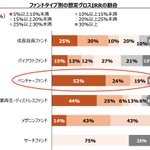
Absolutely brutal liquidity data on private capital…
25% of Venture Capital funds take over 18 years to fully liquidate
Average time to fully liquidate for PE funds is now 14 years. Only 12% liquidate within a decade.


Louis Murayama | るい retweeted

Excellent comment on this FT article about the Binance hack
ft.com/content/1d4dd7b2-9dee…

Louis Murayama | るい retweeted

衛星データとAIで、コンゴ民主共和国の鉱業分野の透明性とレジリエンス向上へ。
SolafuneはUNIDO東京事務所、コンゴ国家地質調査所(SGNC)と連携し、鉱山活動の把握、掘削量の推定、今後調査すべき地域の絞り込みに取り組んでいます。#衛星データ #AI
詳しくは: itpo-tokyo.unido.org/outcome…

Louis Murayama | るい retweeted

For Emerging GPs: If you are talking to wealth advisor firms or large institutions, it's less about talking about how small VC firms can have an extreme right tail outcome. Of course thats true.
The thing you need to show is 1) Why you won't present career risk for them 2) How you will allow them to scale over time (sidecars, co-investments, future funds), and 3) Why you are committed to building a firm.
You cannot just focus on "Small is better", "We are unique". If you don't understand the buyer incentives, it won't matter.
Louis Murayama | るい retweeted

Just a timely reminder, before you rush to buy the Anthropic IPO, that out of the 20 largest public offerings since 2010, the average drawdown was 60% in their first 12 months.

Louis Murayama | るい retweeted

BREAKING: Binance has been hacked with wallets across the Ethereum, Bitcoin, and TRON networks seeing outflows of -$5.7 billion.
The hack includes $1.45 billion worth of Bitcoin and $875 million worth of ETH.
If confirmed, this would mark the biggest hack in crypto history.
We expect more information shortly.
Louis Murayama | るい retweeted

Every time I hear "10 sigma" event...


BREAKING: Brazil's -19.8% stock market crash on Monday was one of the rarest market events in the last two decades, according to our analysis.
Brazil's EWZ ETF plunged -19.8% on October 26th, marking an 8.4 standard deviation move.
For context, the ETF's average daily move over the last 20 years has been just +0.04%, with a standard deviation of 2.36%.
Under a normal distribution, the probability of a decline this extreme is approximately 1 in 58 quadrillion.
In other words, this event should be virtually impossible under conventional statistical models.
What just happened in Brazil was *almost* impossible.


Louis Murayama | るい retweeted

The most mind blowing stat we've seen so far is this:
"As of June 30, 2026, we had raised an aggregate of $141.1 billion of capital and had cash and cash equivalents of $112.4 billion and short-term investments of $19.3 billion."
That means to date, they have burned 9.7b, they are growing at a rapid pace, and are profitable on an operating income basis as of the June quarter! This is likely the most efficient scaling of a business in the history of capitalism.
teapawt.org/AnthropicAI/status/211…

Anthropic has filed an S-1 registration statement with the SEC related to its proposed IPO.
Read more: anthropic.com/news/s1-sec
Legal disclaimer: A registration statement relating to these securities has been filed with the SEC but has not yet become effective. These securities may not be sold, nor may offers to buy be accepted, prior to the time the registration statement becomes effective. This post does not constitute an offer to sell or the solicitation of an offer to buy these securities, nor shall there be any sale of these securities in any state or jurisdiction in which such offer, solicitation or sale would be unlawful prior to registration or qualification under the securities laws of any such state or jurisdiction.


Louis Murayama | るい retweeted

If you've ever wondered why smart TVs are so cheap, this is why.
@log4j rooted his Samsung and found an always-on hot mic, automatic content recognition, geolocation, network mapping, ad targeting and user profiling, shared with Samsung's "400 partners".
A lot of it can be blocked in <15 min, wrote a basic guide below.
What your TV is doing
The main culprit is ACR (automatic content recognition). Your TV screenshots what's on screen, fingerprints it, and sends it home to build your ad profile. Samsung does it every 500ms, LG every 10ms [1].
What is insane: it happens on connected devices too.
Plug in your laptop, your console, your work machine, and your TV can fingerprint that via HDMI [1].
He also found that if your Samsung doesn't have a mic, it'll look for one from a connected soundbar or bluetooth device.
teapawt.org/log4j/status/211376224…
It's on by default, and you likely agreed to it on the setup screen you clicked through in 10 seconds.
Step 1: Turn off ACR
Samsung: Terms & Privacy → Viewing Information Services
LG: Live Plus
Vizio: Viewing Data
Roku: "Use info from TV inputs"
Sony/Google TV: Samba Interactive TV
Menus vary by model, but those are the names to look for. While you're in there, opt out of interest-based ads, reset your advertising ID, decline every optional privacy agreement, turn off voice recognition, and delete apps you never open.
Step 2: Give smart devices their own network
Put the TV, cameras, speakers and vacuum on your router's guest/IoT network. The logic is simple: these devices rarely get patched. If one gets compromised (getting drastically more frequent with AI), it shouldn't be able to see your other devices or home network.
Step 3: Block trackers for the whole house with DNS-level filtering
NextDNS (cloud-based) is easy and has a solid free plan. Pi-hole is a little bit more work if you prefer self hosting. For simplicity we'll focus on the former.
1. Sign up at nextdns.io (free tier is plenty)
2. Privacy tab: add a blocklist (OISD is a good bet) and turn on Native Tracking Protection for Samsung, LG, Roku, Amazon (see attached image)
3. Setup tab: copy your endpoint
4. Paste it into your router's DNS settings as DNS-over-HTTPS/TLS (or use the IPs + "Link IP" if your router only does plain DNS)
5. Bonus: block outbound port 53 except to your router. Some devices hardcode their own DNS to get around you
Then open the NextDNS logs and watch how often your TV phones home. It's eye-opening. If an app or update breaks, find the domain in the logs and allowlist it.
Why they do this
TV prices are down 97% since 2000 [2]. Most of that is better manufacturing and brutal competition. But once margins on the hardware hit zero, the cost moved to you.
In Q3 2024, Vizio lost $6.7M selling TVs and made $115.8M in gross profit from ads and viewing data [3]. They've said on earnings calls that they keep TV prices low to grow the audience they sell to advertisers. Walmart bought them in 2024.
This isn't a conspiracy theory either. Vizio paid $2.2M to the FTC in 2017 for tracking 11 million TVs without consent. Last December, Texas sued Samsung, LG, Sony, Hisense and TCL over ACR. Samsung and LG have since agreed to stop collecting that data without explicit consent [4].
TL;DR
1. ACR off
2. Ads + voice off
3. Smart devices on their own network
4. NextDNS filtering on the router
Sources:
[1] ACR study: arxiv.org/abs/2409.06203
[2] Cost of US consumer goods: aei.org/economics/chart-of-t…
[3] Vizio Q3 2024: sec.gov/Archives/edgar/data/…
[4] Texas v. Samsung: texasattorneygeneral.gov/new…


Louis Murayama | るい retweeted

くだらない産業政策より、雇用改革で労働生産性を上げることが日本政府の仕事ナンバーワンだ。

日本の労働生産性は低迷する。2024年の時間当たり生産性は経済協力開発機構(OECD)に加盟する38カ国で28位。主要7カ国で最低で米国の半分だ。00年は首位だった製造業も20位に低下した。
日経記事▶nikkei.com/article/DGXZQOUC2…
